
कृपया इसे हिंदी में पढ़ने के लिए यहाँ क्लिक करें
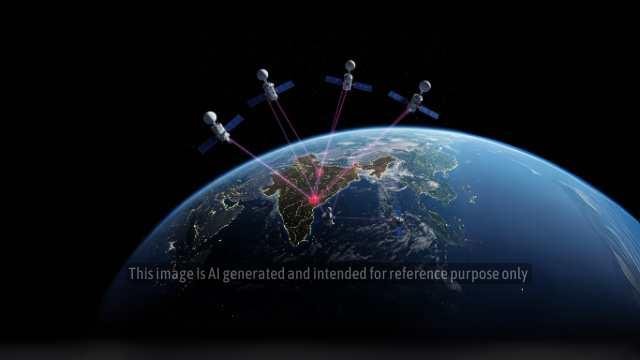
In a significant move to enhance national security and surveillance capabilities, the Cabinet Committee on Security (CCS), led by Prime Minister Narendra Modi, has approved the third phase of the Space-Based Surveillance (SBS-III) program. This ambitious initiative involves the development and deployment of 52 advanced surveillance satellites in both low Earth orbit (LEO) and geostationary orbit (GEO), with a projected budget of approximately ₹27,000 crore.
A Strategic Leap in Surveillance
The SBS-III program aims to significantly bolster India’s ability to monitor its borders and surrounding regions, particularly focusing on areas of strategic interest along the Line of Actual Control (LAC) with China and the borders with Pakistan. The deployment of these satellites is expected to provide real-time intelligence, enhancing the nation’s capacity to detect and respond to potential threats.
Public-Private Collaboration
In a notable shift towards involving the private sector in defense and space endeavors, the Indian Space Research Organisation (ISRO) is set to develop and launch 21 of these satellites, while the remaining 31 will be constructed by private companies. This collaboration underscores the government’s commitment to fostering innovation and self-reliance in the space sector.
Technological Advancements and AI Integration
The upcoming satellite fleet will incorporate cutting-edge artificial intelligence (AI) technologies, enabling the satellites to communicate with each other and autonomously gather geo-intelligence. This inter-satellite communication will allow for more efficient data collection and analysis, reducing the need for extensive ground-based interventions.
Historical Context and Evolution
India’s journey in space-based surveillance began with the initiation of the SBS-I under the Vajpayee government in 2001, leading to the launch of four satellites. This was followed by SBS-II in 2013, which added six more satellites to the constellation. The approval of SBS-III marks a significant escalation in both scale and technological sophistication, reflecting India’s growing ambitions in space and defense.
Strategic Implications
The enhanced surveillance capabilities are expected to provide comprehensive coverage of India’s land and maritime domains, facilitating better monitoring of adversarial activities, including infrastructure developments along contentious borders and movements in the Indian Ocean Region. This initiative aligns with India’s broader strategy to maintain regional stability and safeguard national interests.
Future Prospects
The SBS-III program is poised to position India among the leading nations with advanced space-based surveillance systems. The integration of AI and the involvement of the private sector are indicative of a forward-looking approach, ensuring that India’s defense capabilities remain robust and responsive to emerging challenges.
Engaging Anecdote
In a lighter vein, the ambitious scale of the SBS-III program brings to mind the classic Bollywood dialogue, “Picture abhi baaki hai, mere dost,” suggesting that India’s space and defense narrative is far from over and is set to unveil more thrilling chapters.
Conclusion
The approval of the SBS-III program marks a pivotal moment in India’s defense and space endeavors. By harnessing advanced technologies and fostering public-private partnerships, India is not only enhancing its surveillance capabilities but also paving the way for a self-reliant and innovative future in space exploration and security.
Disclaimer: This article is based on information available from various reputable sources as of April 9, 2025. This news article is based on publicly available information and official statements from government and military officials. The details regarding India’s military space program, including the planned satellite constellation and forthcoming doctrine, are subject to change as the initiatives develop. This article does not contain classified information and is intended solely for informational purposes. The opinions expressed by officials quoted in this article represent their views at the time of their respective statements. Readers should consult official government sources for the most current information regarding India’s space and defense programs. The mention of specific technologies, capabilities, or strategic considerations does not imply endorsement or criticism by this publication. The author and publisher shall not be held liable for any misinformation or errors arising from unforeseen circumstances.









Leave a Reply