
कृपया इसे हिंदी में पढ़ने के लिए यहाँ क्लिक करें
A Looming Crisis in the Tech and Defense Sectors
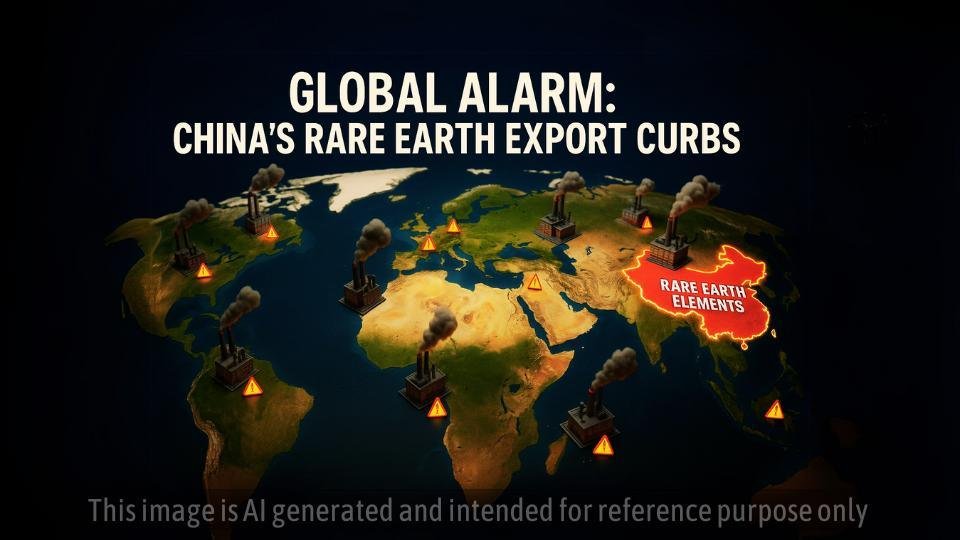
The world is on high alert as China, the dominant player in the rare earth elements market, has tightened export restrictions. These elements, though not truly ‘rare’, are crucial for a vast range of modern technologies, from electric vehicles and smartphones to wind turbines and advanced defense systems. This move by China has sent ripples across the globe, sparking concerns about supply chain vulnerabilities, economic repercussions, and geopolitical tensions.
What are Rare Earth Elements?
Rare earth elements are a group of 17 chemically similar metals essential for various high-tech applications. They are used in electric vehicle motors, wind turbines, smartphones, electronics, lasers, and defense equipment. While not scarce in the earth, they are difficult to extract in concentrated amounts, making the mining and processing of these elements a specialized and strategically important industry.
China’s Dominance and New Restrictions
China has historically held a commanding lead in the rare earth elements sector, controlling 60% of global production and a staggering 90% of global refining and processing. Recently, China has intensified its control by implementing stricter licensing rules and slowing down the approval process for exporting seven specific rare earth elements and high-performance magnets. This includes a new national tracking system that requires companies to register rare earth magnet production and provide detailed information on end-users. This move is widely interpreted as a strategy to control and potentially reduce exports.
Global Impact: A Cascade of Concerns
The consequences of China’s export restrictions are far-reaching:
- Automotive Industry: European and Indian automotive manufacturers, particularly those focused on electric vehicles, are facing potential plant shutdowns and shortages of essential rare earth magnets.
- Defense Sector: Western defense suppliers are grappling with uncertainties in the supply of critical components used in radars, sonar systems, jet engines, and precision-guided munitions.
- Renewable Energy: Clean energy projects in Europe and North America are experiencing delays due to supply bottlenecks for components used in wind turbines and solar technologies.
- Economic Impact: The prices of rare earth elements have surged globally, leading to increased manufacturing costs across numerous industries.
Geopolitical Chessboard: China’s Strategic Play
This move by China is not happening in a vacuum. It’s largely seen as a strategic maneuver in response to ongoing trade and technology tensions with the United States, particularly concerning semiconductors, artificial intelligence, and electric vehicles. China views this as a form of economic warfare, aiming to exert pressure for more favorable negotiations. A historical parallel can be drawn to 2010 when China blocked rare earth exports to Japan amidst a maritime dispute, showcasing its willingness to use these resources as leverage.
International Response: Seeking Alternatives
The international community is reacting with a mix of concern and determination to diversify supply chains:
- European Union: Has demanded clarification from China, requested exemptions for civilian use, and is considering approaching the World Trade Organization (WTO), arguing that China’s actions violate free trade principles.
- United States: Is increasing funding for domestic rare earth mining, actively seeking alternative supply chains from countries like Australia and Canada, and boosting its stockpiles of these critical elements.
- Japan, India, South Korea: Are engaging in bilateral discussions with countries like Australia and Vietnam to explore increased supply options.
The Road Ahead: Uncertainties and Potential Shifts
The future remains uncertain, but several potential scenarios are emerging:
- The establishment of new supply chains outside of China.
- Increased efforts in recycling rare earth elements from electronic waste.
- The formation of new alliances among nations to secure access to these vital resources.
- The potential for an escalation of trade wars if the situation is not resolved diplomatically.
Impact on India
India’s automotive sector, especially its burgeoning electric vehicle production, is particularly vulnerable to these restrictions. The Indian government is likely to intensify its efforts to secure alternative sources and potentially invest more heavily in domestic rare earth exploration and processing.
Disclaimer: This news article is based on publicly available sources and aims to provide a comprehensive overview of the situation. While every effort has been made to ensure accuracy and objectivity, the global situation surrounding rare earth elements is dynamic and subject to change. This article does not constitute legal or financial advice. Readers are encouraged to consult multiple sources and experts for a complete understanding of this complex issue.








Leave a Reply