
कृपया इसे हिंदी में पढ़ने के लिए यहाँ क्लिक करें
New Delhi Forges Path for “Viksit Bharat 2047” with Ambitious Banking Reforms
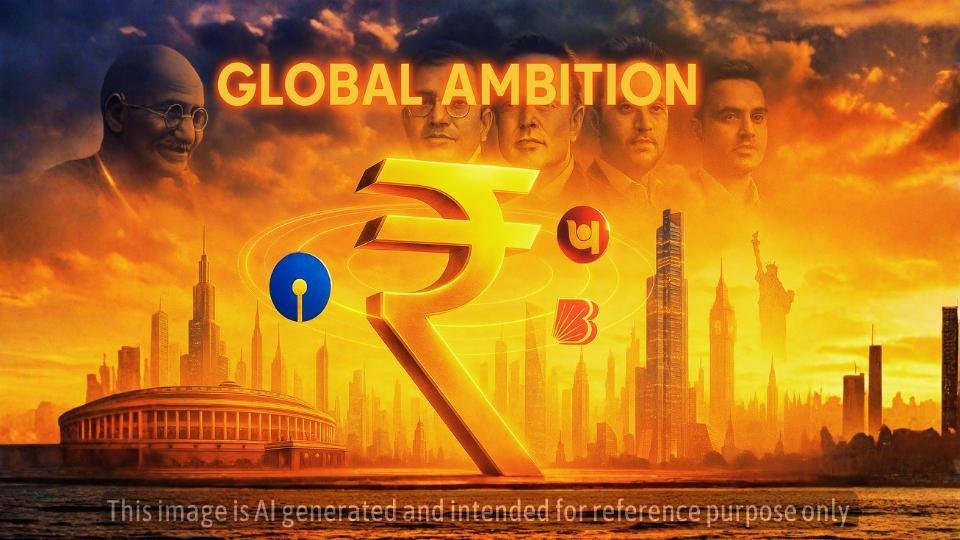
In a major strategic push to cement its position on the global economic stage, the Indian government is laying the groundwork for a second wave of massive public sector bank (PSB) mergers. The ambitious goal, part of the “Viksit Bharat 2047” vision, is to create at least two Indian banks that are large enough to rank among the world’s top 20 financial institutions by assets. This bold move aims to build banking giants capable of financing India’s growing infrastructure needs and competing with the largest international banks.
The Vision: Creating Global Champions
While India’s economy is one of the fastest-growing in the world, its banks lag significantly behind their global peers in terms of size. Currently, the State Bank of India (SBI), the country’s largest lender, ranks only 43rd globally. The next largest, HDFC Bank, is in the top 100, but other Indian banks are far behind. To put this in perspective, the 20th largest bank globally, UBS, has assets of over $1.7 trillion, more than double the size of SBI.
To close this gap, the government believes that larger, more robust banks are necessary. The idea was a central theme at the recently concluded “PSB Manthan 2025” summit, a high-level strategic conference involving top policymakers, regulators, and bank executives. The consensus is clear: to fund India’s projected $4.5 trillion infrastructure investment needs by 2040, the country needs banks with much bigger balance sheets.
The Backstory: A Journey of Consolidation
This is not the first time India has embarked on a path of bank consolidation. The last major merger took place in 2019-2020, a landmark reform that dramatically reshaped the banking landscape. In that wave, the number of PSBs was reduced from 27 to just 12. For instance:
- Punjab National Bank absorbed Oriental Bank of Commerce and United Bank of India, becoming the nation’s second-largest PSB.
- Canara Bank merged with Syndicate Bank.
- Union Bank of India amalgamated with Andhra Bank and Corporation Bank.
- Indian Bank merged with Allahabad Bank.
This first round of consolidation was aimed at strengthening the banks, improving their efficiency, and creating a more stable financial system. The upcoming second round is seen as the next logical step in that journey—moving from national strength to global competitiveness.
The Roadmap Ahead: A Phased Approach
The journey to 2047 will be a carefully planned, three-phase process:
- Phase 1 (2025-2030): Foundation Building: The immediate focus will be on identifying two “national champion” banks to spearhead this mission. This phase will involve significant capital infusion, major technology upgrades, and governance reforms to give the banks more autonomy and make them more professional.
- Phase 2 (2031-2039): Scaling and Globalization: Once the foundation is strong, the selected banks will begin expanding their international presence in 4-8 key global markets. They will also be encouraged to diversify their income streams beyond traditional lending into areas like treasury operations and trade finance.
- Phase 3 (2040-2047): Global Leadership: The ultimate goal is to position these banks as true global players with strong overseas networks, achieving financial metrics comparable to their international peers and securing a firm ranking in the top-20 list.
A Social Message: Big Banks for a Big Nation
As India strides towards becoming a developed economy, its financial institutions must also evolve to match its aspirations. Creating mega-banks is not just about numbers on a balance sheet; it is about building financial powerhouses that can support the dreams of a billion-plus people. These institutions will be the engines of growth, funding the roads, ports, and industries that will define the “Viksit Bharat” of tomorrow. This plan is a testament to India’s confidence and its unwavering resolve to claim its rightful place in the global order.









Leave a Reply