
कृपया इसे हिंदी में पढ़ने के लिए यहाँ क्लिक करें
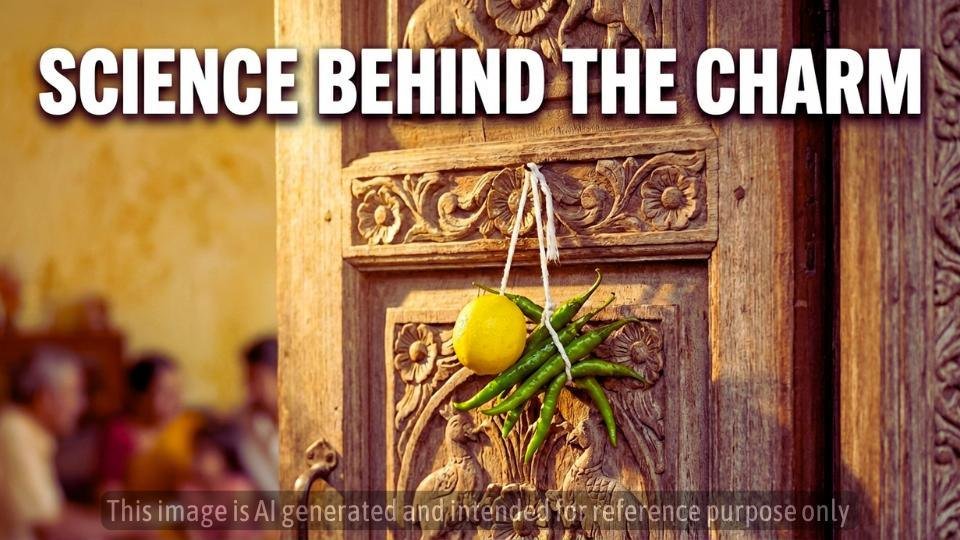
Walk down any street in India, and you’re bound to see it: a curious-looking talisman made of a bright yellow lemon and a few green chilies, strung together and hanging at the entrance of a home, a shop, or even from the bumper of a brand-new truck. For many, it’s a familiar sight, a symbol of protection. But is it just a superstition passed down through generations, or is there a clever scientific reason behind this practice? Let’s dive deep into this fascinating tradition and uncover the truth from every angle.
A Shield Against the Unseen: The Belief in ‘Nazar’
For centuries, the primary reason people have hung the “nimbu mirchi totka” is to protect their homes and businesses from the “buri nazar,” or the evil eye. In many cultures, it is believed that a look of jealousy or envy can bring bad luck, illness, and financial loss. This simple charm is thought to act as a shield, absorbing the negative energy at the doorway and preventing it from entering.
There’s also a fascinating story from folklore involving two goddesses: Lakshmi, the goddess of wealth and prosperity, and her sister, Alakshmi, the goddess of poverty and misfortune. It is said that Alakshmi enjoys sour and pungent foods. By hanging lemons and chilies at the entrance, it is believed that she is satisfied, eats her fill, and turns away, which in turn stops misfortune from entering the home and clears the path for Goddess Lakshmi to bring in prosperity.
The Science Unveiled: Nature’s Own Pest Control
While the spiritual beliefs are strong, there is a surprisingly practical and scientific side to hanging lemons and chilies. Think of it as one of the world’s first natural air fresheners and insect repellents.
Here’s how it works: Lemons are rich in citric acid, and chilies contain a compound called capsaicin. When a cotton thread is pierced through the lemon and chilies, it absorbs these potent natural chemicals. The thread then acts like a wick, slowly releasing a sharp, pungent aroma into the air through a process called capillary action.
This strong smell, while unnoticeable to most humans, is a powerful deterrent for insects like flies and mosquitoes. In older times, when houses were often made of mud and chemical pesticides didn’t exist, this was a brilliant, organic way to keep pests from entering homes and shops, thus protecting families and food from contamination.
A Hidden Fact: More Than Just a Charm
Our ancestors were incredibly resourceful. Beyond its protective qualities at home, this combination also served other purposes. In ancient times, when people traveled long distances through forests, they would carry lemons and chilies. A snakebite was a common danger, and with no immediate way to know if a snake was venomous, the chili was used as a crude test. It was believed that if a person bitten by a snake could still taste the spiciness of the chili, their taste buds were working, and the snake was likely not venomous. If they couldn’t taste it, it was a sign that the venom was affecting their nervous system. The lemon, rich in Vitamin C, also helped with hydration during long journeys.
Why Does It Need to Be Replaced Weekly?
The tradition of replacing the nimbu mirchi every week, often on a Saturday or Tuesday, also has a practical explanation. Over several days, the lemon and chilies begin to dry out. More importantly, the pores of the cotton thread get clogged with dust, which stops it from effectively releasing the pest-repelling aroma. A fresh one ensures the “air freshener” continues to work efficiently.
A Message of Harmony
The story of the lemon and chili is a beautiful example of how science and tradition can walk hand-in-hand. What started as a simple, effective way to keep homes clean and disease-free was woven into the rich fabric of cultural beliefs. It shows the deep wisdom of our ancestors, who found solutions in nature for everyday problems. Whether you see it as a symbol of faith or a clever life hack, this humble charm reminds us that sometimes, the oldest traditions hold the most sensible secrets. It’s a message to respect both knowledge and belief, understanding that they often lead to the same path of well-being.








Leave a Reply