
कृपया इसे हिंदी में पढ़ने के लिए यहाँ क्लिक करें
The Timeless Brilliance of Vedic Rishikas
Indian civilization holds a profound respect for the feminine energy, often referred to as Shakti. This energy is not just a concept but a living reality that has guided history, philosophy, and spirituality for millennia. Long before the modern era, women were the primary torchbearers of intellect and divine wisdom. They were not merely participants in the household but were recognized as profound thinkers, philosophers, and seers known as Rishikas. These women composed hymns, debated with the greatest sages, and established the foundation of spiritual life.
The back story of these women is as captivating as it is inspiring. In an age where knowledge was considered the ultimate currency, these women mastered the Vedas, the Upanishads, and the complex art of spiritual debate. They proved that true intellect knows no gender. Their voices resonate through the ancient texts, reminding us that the light of knowledge is accessible to all who seek it with dedication and purity of heart.
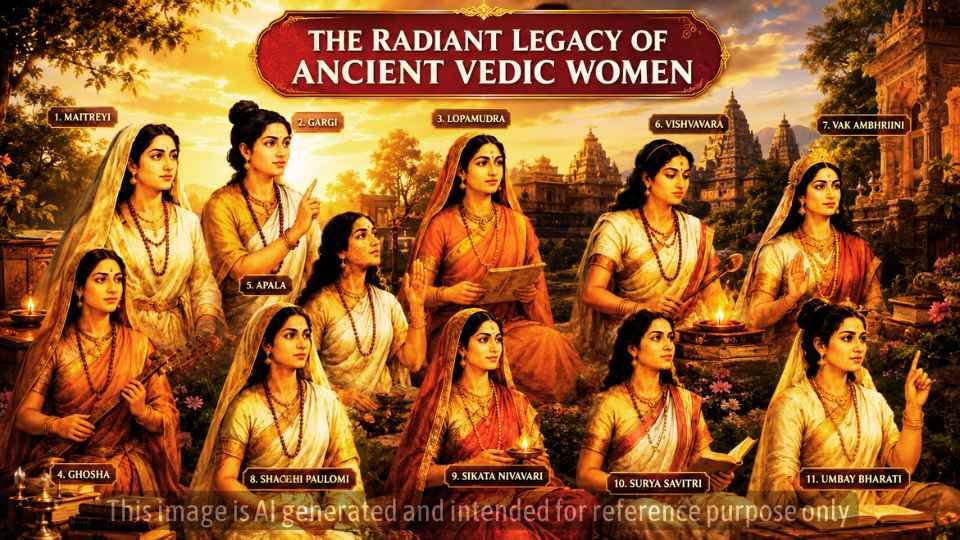
The Eleven Great Wise Women
Maitreyi was the embodiment of the seeker of truth. As the wife of the great sage Yajnavalkya, she did not settle for material wealth. Instead, she asked for the knowledge of the Self, famously questioning if riches could grant immortality. Her dialogues remain a cornerstone of the Upanishads.
Gargi stands out as a titan of logic and debate. She challenged the greatest scholars in the royal court of King Janaka. Her questions regarding the nature of Brahman were so profound that even the most learned men were left speechless. She represents the fearless spirit of intellectual inquiry.
Lopamudra was the wife of the sage Agastya and a powerful mantra seer. She managed to balance the demands of worldly life with the heights of spiritual realization. Her contributions to the Rig Veda highlight her role as a visionary who saw the truth behind existence.
Ghosa was a Rishika of the Rig Veda who dedicated her life to worship. She is known for her deep devotion to the Ashwin Kumaras. Her life serves as a testament to the idea that perseverance and devotion can overcome even the most difficult personal hardships.
Apala is another brilliant figure from the Rig Veda. Her hymns describe a deep connection with nature and the divine. She overcame personal physical struggles through her unwavering faith and prayer, proving that spiritual strength can transform life.
Vishwavara was a woman who performed Yajna, or sacred rituals, herself. This was a rare and significant act in ancient times. She composed hymns that were powerful enough to be included in the sacred texts, establishing herself as an equal to any male sage.
Vak Ambhrini composed the famous Devi Sukta. In this beautiful hymn, she identifies herself as the consciousness that pervades the entire universe. She speaks with the voice of authority, claiming that she is the power behind all creation.
Shachi Paulomi was known for her brilliant and powerful thoughts. She advocated for Dharma, which is the path of righteousness, and her wisdom helped guide society toward a moral and ethical existence. Her words were sharp and full of light.
Sikata Nivavari is a name found in the Rig Veda as a visionary seer. Her hymns reflect a deep spiritual maturity. She is remembered for her ability to perceive truths that lie beyond the physical world, offering guidance to those seeking enlightenment.
Surya Savitri composed the marriage hymn found in the Rig Veda. This hymn is still chanted during weddings in many parts of India today. She envisioned a household life filled with harmony, prosperity, and spiritual growth, making her a guardian of domestic bliss.
Ubhaya Bharati served as the judge in the famous debate between Adi Shankara and Mandana Mishra. Her impartiality and deep knowledge of philosophy made her the ultimate authority. She demonstrated that true wisdom is balanced and fair, standing tall in the presence of great masters.
A Social Message of Empowerment
The legacy of these eleven women is a powerful reminder that history is built by those who pursue truth. Today, the world needs this same spirit of inquiry and balance. We must honor the feminine power within our own lives, families, and communities. Let us cultivate an environment where knowledge is respected and every individual, regardless of their background, is given the space to grow, question, and shine. True progress happens when we walk together, honoring the wisdom of the past while building a brighter future.
Standard Legal Disclaimer: This article provides educational and historical information based on traditional texts and cultural heritage. It is not intended to serve as a substitute for professional historical or religious advice. The interpretations provided are for informational purposes.







Leave a Reply