
कृपया इसे हिंदी में पढ़ने के लिए यहाँ क्लिक करें
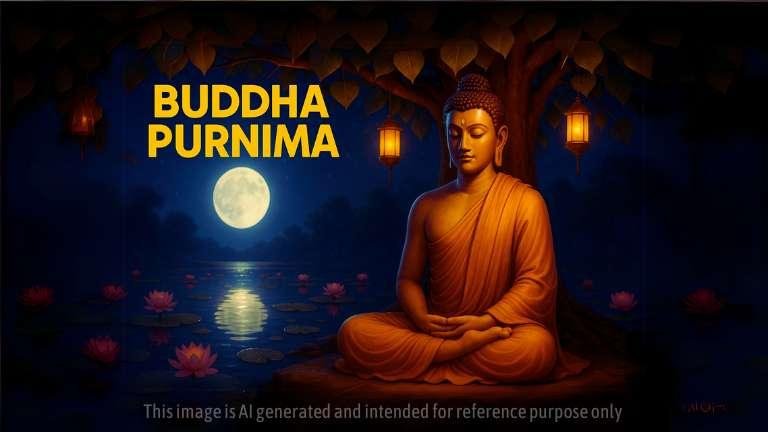
Buddha Purnima, also called Vesak or Buddha Jayanti, falls on Monday, May 12, 2025 and marks three pivotal events in Gautama Buddha’s life: his birth in Lumbini, attainment of enlightenment under the Bodhi tree in Bodh Gaya, and his Mahāparinirvāṇa (passing away) in Kushinagar. Celebrated across Asia—from India and Nepal to South Korea, China, and beyond—with candles, lotus lanterns, temple decorations, and animal-release rituals, it brings together millions in prayer, meditation, and joyful gatherings. While deeply spiritual, it also sees light-hearted moments—such as traders quipping about “bull markets” on a day of lotus markets—when stock exchanges surprisingly remain open. Key figures range from Siddhartha Gautama himself to Emperor Ashoka, Dr. B.R. Ambedkar (who later made it a public holiday in India), and today’s temple custodians at sites like the Mayadevi Temple in Lumbini and Boudhanath Stupa in Kathmandu. Below is an in-depth look, told simply for easy understanding.
Historical Backstory
Birth of the Buddha
Prince Siddhartha Gautama was born in Lumbini (present-day Nepal) around 563 BCE on the full moon day of the month of Vaishakh—hence the name “Purnima,” meaning “full moon,” and “Jayanti,” meaning “birthday”. His birth is traditionally celebrated as a time of hope, peace, and the dawning of compassion in the world.
Enlightenment and Mahāparinirvāṇa
On the same lunar day years later, Siddhartha attained bodhi (complete awakening) under a Bodhi tree in Bodh Gaya, India, becoming the Buddha, “the awakened one”. Tradition holds that on this very day, he also gave his first sermon at Sarnath and, centuries later, passed into Mahāparinirvāṇa—completing the cycle of birth, enlightenment, and death all on the full moon of Vaishakh.
Significance
Buddha Purnima unites these three life-changing events into one festival of reflection and joy. Devotees light candles to symbolize the light of wisdom dispelling the darkness of ignorance, decorate temples with fresh flowers as an offering of impermanence and beauty, and release caged birds or animals to practice compassion and goodwill toward all living beings.
Celebrations Around the World
India and Nepal
In India—where it is a gazetted public holiday thanks to Dr. B.R. Ambedkar’s efforts in the 1950s—Buddhist monasteries (viharas) hold special sutra-chanting services, community feasts, and lantern-lit processions at dawn. At Lumbini, a grand parade begins at the Mayadevi Temple, followed by cultural programs and thousands of oil lamps illuminating the night sky.
Southeast Asia
In Myanmar and Cambodia, devotees flock to pagodas bearing lotus flowers and alms bowls for monks. In Sri Lanka, homes and streets gleam with paper lanterns, while in Malaysia and China, devotees perform a ceremonial bathing of the infant Buddha statue to purify body and mind.
East Asia and Beyond
South Korea’s Yeondeunghoe festival features elaborate lotus-shaped lantern parades and fireworks. Japan observes Hana Matsuri (“flower festival”) on April 8 instead, sprinkling sweet tea on small Buddha statues amid blooming cherry blossoms. Increasingly, Western dharma centers host meditation retreats, art exhibits, and community discussions to honor Vesak’s universal message.
Ground-Level Anecdotes and Light-Hearted Moments
– In Kolkata, local traders joked that on Buddha Purnima they preferred bulls to lotus, as the stock exchanges remained open despite holiday spirits—earning smiles across temple courtyards and trading floors alike.
– In a small Nepalese village, children compete each year in an elephant-painting contest, decorating model elephant statues with lotus motifs to symbolize wisdom and strength—a sight that blends playful art with spiritual teaching.
Key Figures and Temples
- Siddhartha Gautama: The central figure whose life inspires the festival.
- Emperor Ashoka: The Mauryan ruler who spread Buddhism across Asia, commissioning pillars and stupas in Buddha’s honor.
- Dr. B.R. Ambedkar: Led the movement to make Buddha Purnima a national holiday in India, highlighting its importance for social equality.
- Mayadevi Temple (Lumbini): Believed to mark the exact birthplace of the Buddha.
- Boudhanath Stupa (Kathmandu): A UNESCO World Heritage site where thousands circumambulate its grand dome kneeling in prayer.
Lesser-Known Facts
- Some Hindus honor Buddha Purnima as the birth of the ninth avatar of Lord Shree Vishnu, blending Buddhist and Hindu traditions in parts of India.
- The festival’s date can vary by country—often the eighth day of the fourth lunisolar month in East Asia or the first full moon of May in South Asia.
- Devotees sometimes release sky lanterns carrying wishes for world peace, creating a stunning celestial display.






Leave a Reply