
कृपया इसे हिंदी में पढ़ने के लिए यहाँ क्लिक करें
A Culinary Masterpiece Hiding in Plain Sight
For generations, we’ve seen Dal Chawal (lentils and rice) as a staple—a simple, comforting meal for every household, sometimes even labeled as “the poor man’s food.” It’s the meal that fills the stomach, soothes the soul, and brings a sense of home. But what if we told you that this humble combination is not just simple food, but one of the world’s most perfect nutritional pairings, a work of bio-engineering genius our ancestors perfected centuries ago? Let’s dive into the fascinating science of this “perfect couple.”
The Secret Lies in the Building Blocks: Amino Acids
To understand the magic, we first need to talk about protein. Proteins are the building blocks of our body, essential for muscle repair, growth, and overall function. These proteins are made up of smaller units called amino acids. Our body needs nine of these amino acids, called “essential amino acids,” from the food we eat because it cannot produce them on its own.
Now, here’s where the story gets interesting. Most plant-based foods, when eaten alone, are “incomplete proteins.” This means they lack one or more of these nine essential amino acids.
- Chawal (Rice): Rice is a great source of energy and contains the amino acid Methionine. However, it is missing another crucial one: Lysine.
- Dal (Lentils): Dal, on the other hand, is a powerhouse of Lysine. But guess what it lacks? Methionine.
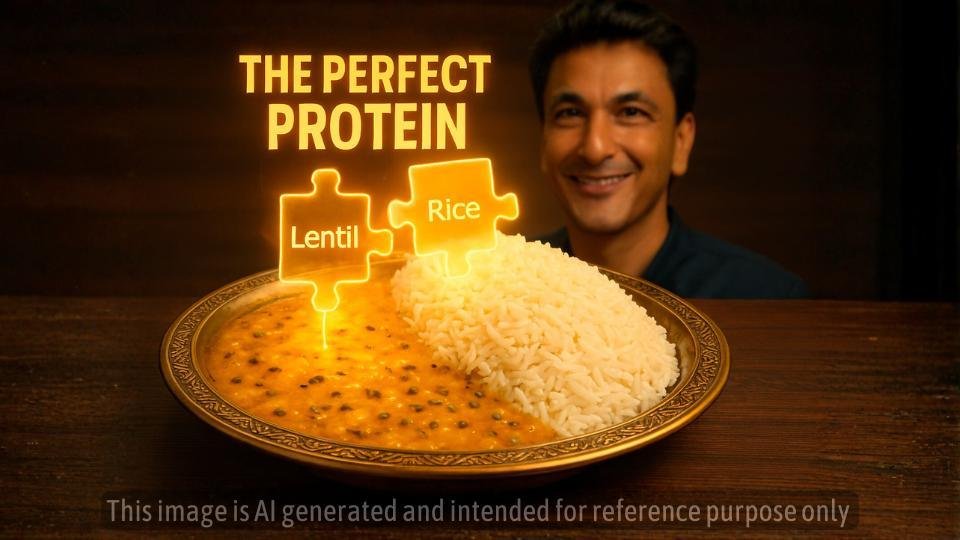
Individually, they are incomplete. They are two pieces of a puzzle, unable to create the full picture on their own.
The “Perfect Couple”: How Science Creates a Complete Protein
When you mix dal and chawal together in a single meal, something truly remarkable happens. The Lysine from the dal completes the rice, and the Methionine from the rice completes the dal. They perfectly complement each other, locking together like the final two pieces of a jigsaw puzzle.
This combination creates a Complete Protein, providing your body with all nine essential amino acids. The nutritional quality of this humble meal suddenly becomes as powerful and complete as expensive, non-vegetarian sources like meat, eggs, or chicken. It’s not just a meal; it’s a perfect chemical equation for your body’s health.
The “Happy Hormones” and a Good Night’s Sleep
Have you ever felt a deep sense of calm and satisfaction after eating Dal Chawal? That feeling is not just in your head; it’s backed by science! This power-packed combination helps in the release of Serotonin, a neurotransmitter often called the “happy hormone.” Serotonin is responsible for regulating our mood, making us feel calm, and promoting well-being. This is why a comforting bowl of Dal Chawal can genuinely lift your spirits and quiet your mind. It also explains why it often leads to the most sound and peaceful sleep you can get.
Ancestral Wisdom: Nutritionists Before Modern Science
Our ancestors may not have had modern labs or nutrition degrees, but they possessed a profound understanding of food and its effects on the body. They knew how to combine ingredients to unlock their full potential. Dal gave them the protein, Chawal gave them the energy, and when topped with a dollop of ghee (clarified butter), it helped activate the fat-soluble vitamins, turning the entire meal into the ultimate superfood. This thali isn’t just food; it’s a plate full of science, wisdom, and love.
A Social Message for a Modern World
In an age of fad diets and exotic superfoods, the story of Dal Chawal reminds us that true health and wisdom are often found in our own roots, in the simple, time-tested meals our grandmothers made. This “perfect couple” is a testament to sustainable, accessible, and powerful nutrition that doesn’t require a fortune. Let’s cherish and celebrate this culinary heritage—a meal that proves that the simplest things in life are often the most perfect.





Leave a Reply