
कृपया इसे हिंदी में पढ़ने के लिए यहाँ क्लिक करें
What’s Going On?
- The US economy shrank by 0.5% in Q1 2025, a sharper drop than earlier believed, driven by a flood of imports ahead of tariffs and weaker consumer spending.
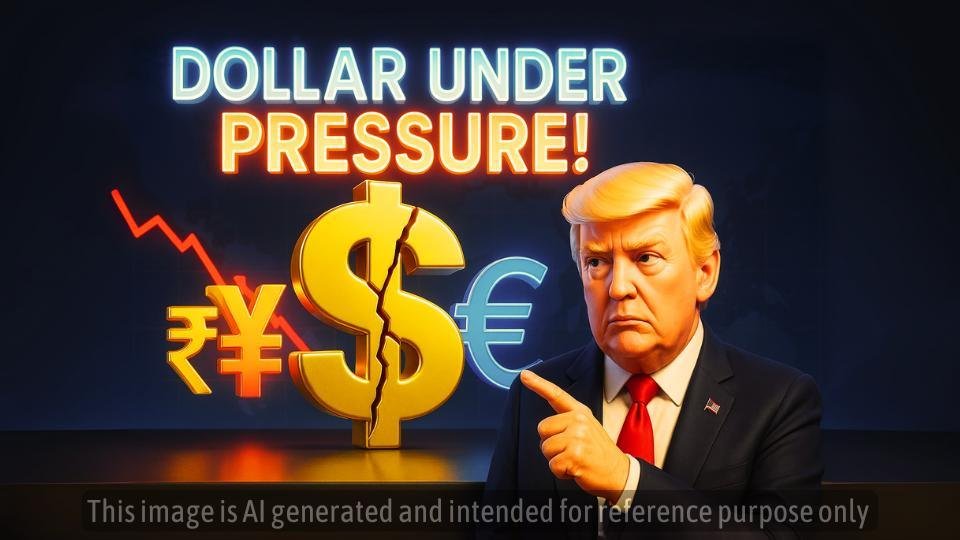
- The US Dollar posted its worst first half in over 50 years, falling nearly 10–10.8% against major currencies—its steepest decline since 1973.
- A India–US trade deal has hit a standstill over disagreements on tariffs for cars, steel, farm goods, and dairy—risking a July 9 deadline.
- Experts warn de‑dollarisation trends may accelerate as US unilateral economic moves and reduced trust in Federal Reserve autonomy push countries toward alternatives.
Why US GDP Shrunk
- Import surge before tariffs: Businesses rushed to bring in goods ahead of new duties, cutting GDP by ~4.6 ppt.
- Weaker consumer spending: Slowed to a 0.5% rise, down from 1.2%, slowing growth.
- Reduced government spending: Fell roughly 4.6%, amplifying contraction.
Bottom line: These factors combined to erase typical growth patterns in Q1.
Why the Dollar Plunged
- Policy uncertainty under Trump: Tax and spending proposals adding ~$3.2–3.3 trillion to debt, plus unpredictable tariffs, shook investor confidence.
- Federal Reserve under pressure: Trump’s calls targeting Chair Powell and Fed rate cuts raised concerns over the Fed’s independence.
- Shift to alternatives: Investors moved into euro, yen, Swiss franc, gold, and defence stocks.
India–US Trade: Near Miss?
- Deadlock persists: India resists US demands on farm, auto, dairy, and steel tariffs; US pushes deeper cuts.
- Extended talks ahead of July 9: Delhi sent officials to Washington for last-minute resolution; could result in interim deal.
- Interim deal on horizon: FT reports a basic agreement may come this week.
- Roadmap to long-term pact: Aim is to expand trade from ~$191 billion to $500 billion by 2030.
Why De‑Dollarisation Matters
- Global mistrust rising: Policies and Fed independence worries lead nations to explore euros, yuan, rupee settlements.
- Alternative financial systems: Russia-SPFS, China-CIPS, EU‑INSTEX and bilateral rupee trades + growing in Asia.
- Could be long-term: Currency sell-offs may persist into late 2025/early 2026—experts say it’s not just a short dip.
What’s Next
In the coming days and weeks, global markets and policymakers will be closely watching two major events. First, the July 9 tariff deadline looms large. After a 90-day pause initiated in April, sweeping “reciprocal” tariffs—including a potential 26% levy on Indian goods—will either be enforced or delayed again. The U.S. has thus far shown little appetite for another extension, putting immense pressure on negotiators from India to secure at least an interim trade deal this week to avert disruption.
Meanwhile, domestic U.S. developments are equally pivotal. The Federal Reserve, after its June meeting held rates steady between 4.25–4.50% , will next convene on July 29–30. Market expectations have shifted toward two rate cuts later this year (September and December), and even four cuts by 2026, as inflation has cooled and global economic headwinds—including trade tension—continue to mount.
These developments will directly impact the U.S. dollar’s trajectory. If the Fed signals a dovish pivot or Trump advances a new Fed chair aligned with rate cuts, the Dollar may weaken further, sustaining the de-dollarisation trend. Conversely, if inflation picks up—especially through renewed tariffs—or the Fed remains cautious, the Dollar could stabilize.
Social Message
Markets feel shaky, but panic isn’t necessary. Learn about money, diversification, and global trends. Keep calm, stay informed—don’t believe every viral headline.








Leave a Reply