
कृपया इसे हिंदी में पढ़ने के लिए यहाँ क्लिक करें
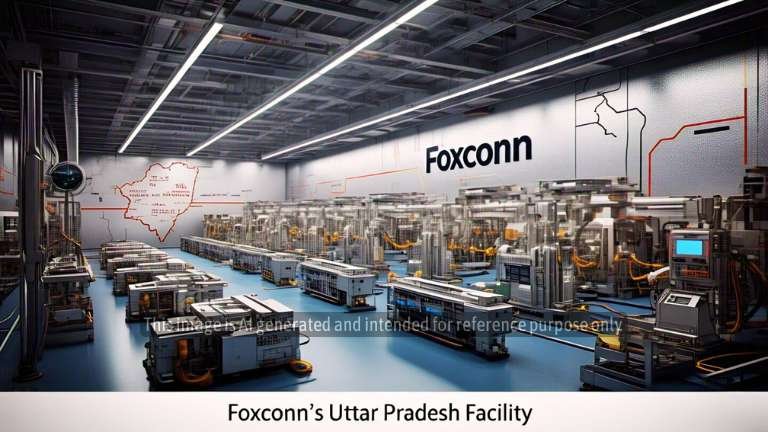
In a significant move towards expanding its footprint in India, Taiwanese electronics giant Foxconn is exploring a 300-acre site near Greater Noida, Uttar Pradesh, for its first facility in North India. This potential investment aims to bolster India’s position in the global electronics manufacturing landscape.
Strategic Expansion in North India
Foxconn, known for assembling Apple’s iPhones, is considering this massive land parcel to establish a facility that could produce up to 30 million iPhones annually. The proposed site near Greater Noida offers strategic advantages, including proximity to the upcoming Jewar Airport and existing industrial infrastructure.
Collaborative Ventures and Investments
In addition to its solo endeavors, Foxconn has partnered with India’s HCL Group to form a joint venture named Vama Sundari Investments. This collaboration has secured approximately 48 acres of land in Sector 28 of the Yamuna Expressway Industrial Development Authority (YEIDA) region. The venture plans to invest around ₹3,706 crore in establishing an outsourced semiconductor assembly and test (OSAT) facility, marking Uttar Pradesh’s first chip production unit.
Government Support and Infrastructure
The Uttar Pradesh government’s proactive approach has been instrumental in facilitating these developments. By reallocating land to more infrastructure-ready sectors, such as Sector 28, the government aims to expedite project timelines and reduce procedural delays.
Foxconn’s Growing Presence in India
Foxconn’s interest in Uttar Pradesh aligns with its broader strategy to diversify manufacturing bases amid global geopolitical shifts. The company has already invested significantly in India, including a 300-acre land purchase in Bengaluru for ₹300 crore. These expansions are expected to create substantial employment opportunities and contribute to India’s goal of becoming a global electronics manufacturing hub.
Potential Impact and Future Prospects
The establishment of Foxconn’s facility in Uttar Pradesh could have far-reaching implications. It would not only boost local employment but also enhance the state’s industrial profile. Moreover, the collaboration with HCL for semiconductor manufacturing aligns with India’s ambitions to develop a robust semiconductor ecosystem, reducing reliance on imports and fostering technological self-reliance.









Leave a Reply