
कृपया इसे हिंदी में पढ़ने के लिए यहाँ क्लिक करें
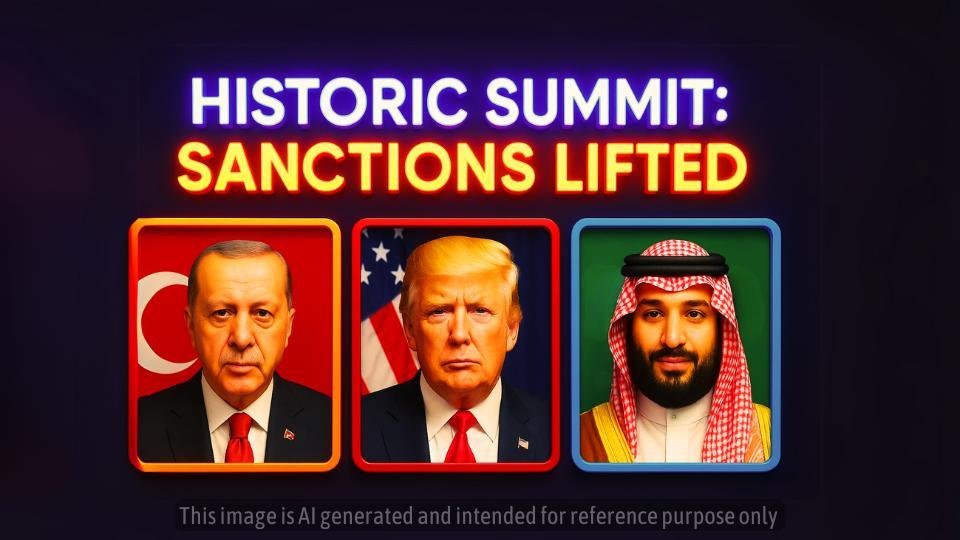
Turkish President Recep Tayyip Erdogan on May 14, 2025 joined an online summit with the U.S. President Donald Trump, Saudi Crown Prince Mohammed bin Salman and Syrian President Ahmed al-Sharaa, praised the decision to lift all U.S. sanctions on Syria as a “historic” step that could encourage investment and regional stability. The meeting, held during Trump’s Gulf tour, underscores a major reorientation of the U.S. Middle East policy and signals renewed engagement with Damascus after more than a decade of isolation.
Background
Syrian Sanctions and Isolation
Since 2011, the United States and many Western nations imposed tough sanctions on Syria in response to the Assad government’s crackdown on protests, cutting Damascus off from global financial markets and hindering humanitarian aid. These measures left Syria heavily dependent on Russia, Iran and China for economic support and reconstruction assistance.
Rise of Ahmed al-Sharaa
Ahmed al-Sharaa, a former commander of the Islamist group Hay’at Tahrir al-Sham, assumed leadership of Syria’s transitional government after the fall of Bashar al-Assad in December 2024 and officially became president in January 2025. He pledged to rebuild Syria, integrate Kurdish and opposition forces, and pursue peace with Israel, though critics remain wary given his past.
Details of the Online Summit
Participants and Format
Erdogan joined the virtual meeting from Ankara, while President Trump was in Riyadh on the first state visit of his second term. Crown Prince Mohammed bin Salman was present in person, and President al-Sharaa attended from Damascus.
Key Statements
- Historic importance: Erdogan described Trump’s lift of sanctions as setting “an example for other countries” still bound by Cold War-era restrictions, opening doors for foreign investment in sectors from energy to infrastructure.
- U.S. policy shift: Trump announced “ceasing all sanctions” at a Riyadh investment forum, saying “Good luck Syria, show us something very special”.
- Counter-terrorism support: Erdogan reaffirmed Turkey’s readiness to help secure prisons holding Islamic State detainees and to support Damascus in fighting terrorist groups.
Implications
For Syria
Lifting sanctions immediately revives the prospects for humanitarian aid and reconstruction, potentially unlocking up to $400 billion in contracts for U.S. and Gulf companies. Syrian Foreign Minister Asaad al-Shibani called the move a “turning point” and expressed hope for a “historic peace deal” rooted in mutual respect.
For Turkey and Saudi Arabia
Both Ankara and Riyadh had lobbied Trump to ease sanctions as part of broader efforts to stabilize Syria and halt refugee flows into their countries. Turkey also sees an opportunity to deepen economic ties with Syria while reducing Iran’s influence in the region.
For the United States
The decision marks a dramatic diplomatic pivot, privileging strategic and economic ties with Sunni Arab states over long-standing U.S. support for Israeli security concerns. Analysts warn of potential strain on U.S.-Israeli relations but note the opening of new avenues for American businesses.
Reactions and Anecdotes
- Israel’s wariness: Israeli officials have cautioned against rapidly normalizing ties with a leader once affiliated with al-Qaeda, though some acknowledge Syria’s need for reconstruction.
- United Nations: The U.N. welcomed the lift, saying it will help rebuild war-torn communities and support forensic investigation into wartime atrocities.
Conclusion
The online meeting of May 14, 2025, reflects a bold realignment in Middle East diplomacy, uniting former adversaries around reconstruction goals while testing new fault lines in traditional alliances. As Syria emerges from isolation, the true test will be translating diplomatic statements into lasting peace and prosperity for its people.








Leave a Reply