
कृपया इसे हिंदी में पढ़ने के लिए यहाँ क्लिक करें
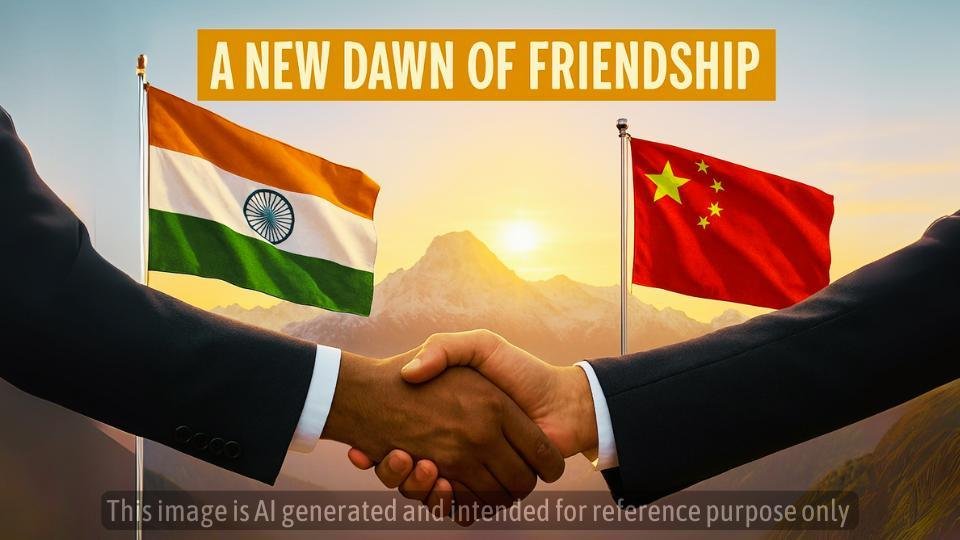
In a world holding its breath, a significant and hopeful development is emerging from the high Himalayas. India and China, two of the world’s most powerful nations, have mutually agreed to fast-track efforts to find a lasting solution to their long-standing and often tense boundary issues. This is not just another diplomatic meeting; it signifies a monumental shift in approach, a pivot from confrontation to conciliation, with the potential to redraw the geopolitical map of Asia and the world. The aim is to finally demarcate the border, piece by piece, and bring peace and stability to the Line of Actual Control (LAC).
The Heart of the Matter: A Glimpse into the Past
For decades, the India-China border has been a complex and sensitive issue. The Line of Actual Control (LAC) is not a clearly demarcated international boundary, leading to differing perceptions of territory and, at times, serious military standoffs. The most recent and severe of these was the May 2020 skirmish, a tragic event that significantly strained relations between the two neighbors.
Think of it like two neighbors having a dispute over the exact location of their fence for a very long time. While they’ve managed to live side-by-side, the unresolved issue has always been a source of tension. Now, imagine those neighbors finally sitting down, agreeing to call in surveyors (the technical expert group) to measure and mark the boundary once and for all, starting with the easiest, least disputed parts of the yard. That’s precisely what’s happening, but on a much grander, mountainous scale.
What’s New? The Breakthrough Explained
Recent high-level talks have been the catalyst for this change. A crucial meeting between Indian Prime Minister Narendra Modi and Chinese President Xi Jinping, along with the 24th Round of Talks between India’s National Security Advisor Ajit Doval and his counterpart, Chinese Foreign Minister Wang Yi, have yielded remarkable progress.
The core of this new breakthrough lies in a pragmatic, step-by-step approach. Here’s a simple breakdown of the plan:
- Start with the “Easy Wins”: Instead of trying to solve the entire, complicated border issue at once, both sides have agreed to first focus on delimiting the “less contentious” areas. This is a smart strategy to build momentum and, more importantly, trust.
- Expert-Led Process: A dedicated technical expert group will be established under the Working Mechanism for Consultation and Coordination on India-China Border Affairs (WMCC). This group will handle the nitty-gritty of the delimitation process.
- Delimitation then Demarcation: The first step is “delimitation,” which means defining the border on maps. The final step is “demarcation,” which involves placing physical markers or pillars on the ground to represent the agreed-upon boundary.
This “piece-meal” approach is being hailed as a diplomatic masterstroke, allowing for what is being termed an “early harvest”—tangible results that can be achieved quickly, fostering a positive atmosphere for resolving the more difficult areas later on.
Beyond the Border: The Bigger Picture
This renewed diplomatic effort is about more than just drawing lines on a map. It’s about rebuilding a relationship. Both nations are taking parallel steps to normalize ties and return to the spirit of cooperation that existed before 2020. These steps include:
- Resuming Direct Flights: Making travel and trade easier between the two countries.
- Boosting People-to-People Connect: Restarting visa services for tourists and allowing Indian pilgrims to visit key religious sites are crucial confidence-building measures.
- Economic Cooperation: Discussions on trade, investment, and supply chains for essential goods are back on the table.
The message is clear: India and China see themselves as “development partners, not rivals.” In an increasingly turbulent world, the “Dragon-Elephant Dance” of cooperation is seen as the right choice for both nations and for global stability.
A Social Message of Hope
The path of dialogue is always more fruitful than the path of conflict. The agreement between India and China is a powerful reminder that even the most complex and long-standing disagreements can be resolved when there is a genuine will for peace and a commitment to mutual respect. It teaches us that progress is often made not in one giant leap, but through a series of small, steady, and sensible steps. For the people of both nations and for the world, this is a beacon of hope, illustrating that cooperation can, and should, triumph over confrontation.








Leave a Reply