
कृपया इसे हिंदी में पढ़ने के लिए यहाँ क्लिक करें
Introduction: A Brewing Trade Tension
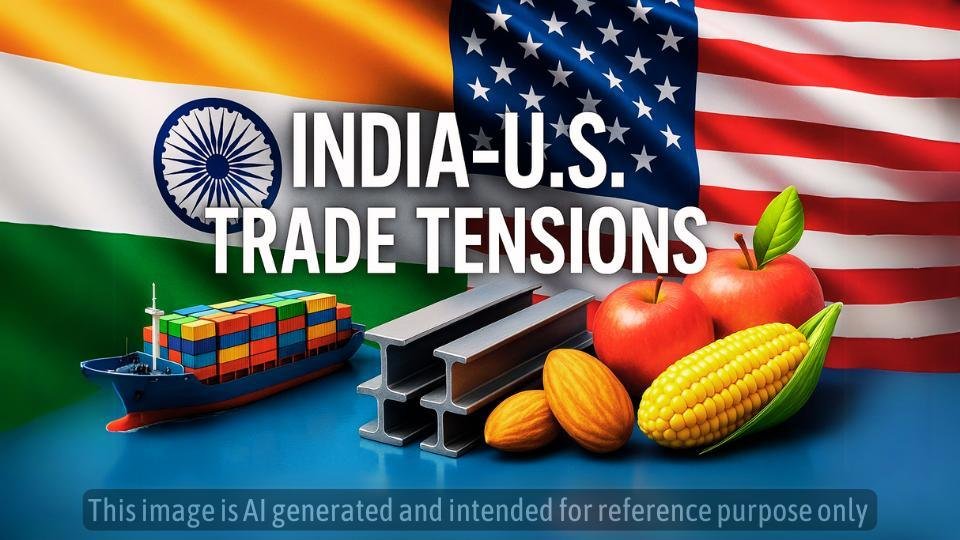
In a significant development, India is considering imposing counter-tariffs on select U.S. products following the United States’ rejection of a World Trade Organization (WTO) notice concerning steel and aluminum tariffs. This move signals a potential escalation in trade tensions between the two nations, which have been engaged in ongoing negotiations to resolve various trade disputes.
Background: The Genesis of the Dispute
The roots of the current situation trace back to 2018 when the U.S., citing national security concerns, imposed 25% and 10% tariffs on steel and aluminum imports, respectively. India, affected by these tariffs, responded by filing a complaint with the WTO and subsequently imposing retaliatory tariffs on 28 U.S. products, including almonds, walnuts, and apples. In June 2023, both countries agreed to resolve six outstanding WTO disputes, leading India to remove these retaliatory tariffs.
Current Developments: WTO Notice Rejected
Despite previous resolutions, tensions resurfaced when the U.S. rejected a recent WTO notice from India concerning the steel and aluminum tariffs. In response, India is now contemplating the imposition of counter-duties on certain U.S. products, signaling a potential tit-for-tat escalation.
Economic Implications: A Closer Look
Experts warn that the U.S. tariffs could severely impact India’s $5 billion engineering export sector, undermining competitiveness and threatening jobs . Conversely, the U.S. agricultural sector, which exports nearly $2 billion worth of goods to India, could face challenges if India proceeds with counter-tariffs.
Negotiation Efforts: Seeking Common Ground
Amidst these tensions, both nations are engaged in negotiations aimed at finalizing a bilateral trade agreement. India has offered significant tariff reductions on various U.S. agricultural products, including almonds and cranberries, while seeking greater access for its exports, such as pomegranates and rice . However, sensitive sectors like dairy and grains remain contentious points.
Expert Opinions: Navigating the Path Forward
The Global Trade Research Initiative (GTRI) suggests that India should address the tariff issues within the broader context of the ongoing Free Trade Agreement (FTA) negotiations, rather than escalating the dispute . This approach could foster a collaborative resolution and prevent further deterioration of trade relations.
Conclusion: A Delicate Balance
The unfolding trade dynamics between India and the U.S. underscore the complexities of international trade negotiations. While both nations have valid concerns, a balanced and pragmatic approach is essential to prevent further escalation and to foster a mutually beneficial trade relationship.









Leave a Reply