
कृपया इसे हिंदी में पढ़ने के लिए यहाँ क्लिक करें
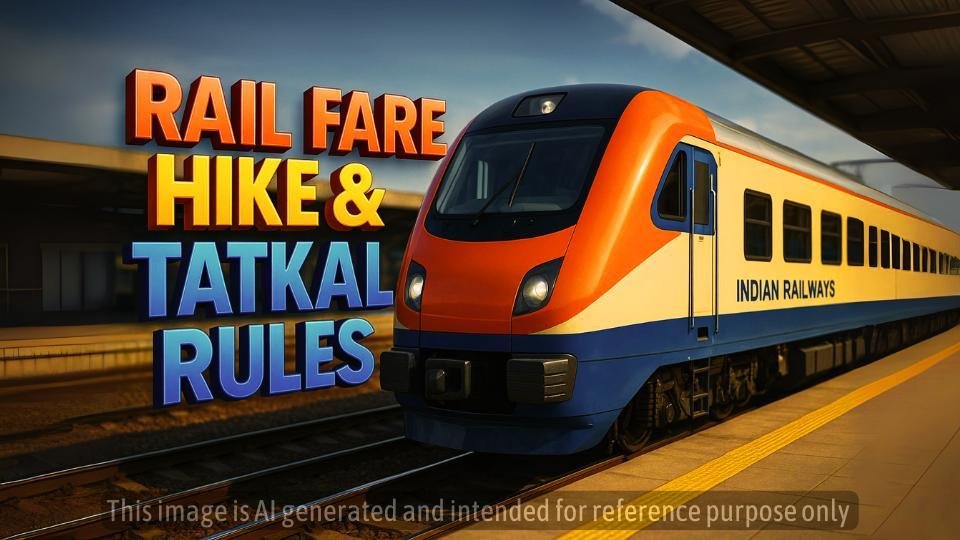
In its first fare revision since the COVID‑19 pandemic, Indian Railways has announced a modest increase in passenger fares effective July 1, 2025. The move comes amid rising operational costs, modernization goals, and efforts to improve passenger experience.
🎟️ Fare Hike Breakdown (effective July 1)
- Non‑AC Mail & Express trains: +1 paise per km
- AC classes (3A, 2A, 1A): +2 paise per km
- Ordinary second‑class (Unreserved):
- ≤ 500 km: No change
- > 500 km: +0.5 paise per km
- Suburban/local and monthly season tickets: No change
💵 What Does It Mean in Practice?
- A 1,000 km non‑AC journey will cost just ₹10 more.
- A similar AC 3‑tier journey will increase by ₹20.
- For ordinary long‑distance travelers, the hike for, say, a 700 km trip in second class comes to just ₹3.50.
- Rail officials note this is the “lowest fare hike in over a decade”, far smaller than the increases in 2013 and 2020.
🔧 Why This Fare Hike?
- Operational costs have soared—diesel, electricity, staff wages, pensions, and maintenance.
- Financial sustainability: Passenger fares are heavily subsidized via freight revenues. This adjustment eases the load and supports modernization.
- Funding transformation: Electrification, new train sets like Vande Bharat, station redevelopments, and eco-friendly ‘Clean Train Stations’ require funds.
- Cleaner journeys: A new “Clean Train Scheme” introduces high‑pressure cleaning, 10‑minute cleaning cycles for coaches, and eco‑friendly materials—all needing investment.
📌 Tatkal Booking Reforms Starting July 1
Indian Railways is rolling out tighter rules for the quick‑booking Tatkal scheme to curb misuse:
- From July 1: Only Aadhaar‑linked & authenticated IRCTC users can book Tatkal tickets online.
- From July 15: An Aadhaar‑based OTP will be required—both online and at PRS counters.
- For authorised agents: AC Tatkal bookings are blocked from 10:00–10:30 AM; Non‑AC blocked from 11:00–11:30 AM.
- The aim: curb bots, bulk agents, touting, ensuring genuine passengers get deals. IRCTC and CRIS are implementing these across zones.
🧭 Backstory & Context
- Last fare hike was in January 2020, during the pandemic onset.
- Then, non‑AC Mail/Express rose by 1 paise/km; AC by 2 paise/km. This time, the increase is 50% of that.
- Suburban and season‑ticket holders have been largely spared to protect daily commuters.
- The Tatkal scheme, launched in 1997, has long battled misuse; past reforms (2015) have failed to curb agent hoarding.
🤝 Balancing Smartly
This fare update reflects a calibrated approach:
- Minimal burden on most passengers and daily commuters.
- Incremental revenue (~₹13,000 crore expected) to fund modernization and environmental improvements.
- Tatkal reforms push towards equity and transparency in bookings.
✅ What Should Passengers Do?
- Check your IRCTC account: Link and authenticate Aadhaar by July 1 to avoid last‑minute rush.
- Prepare for OTP at booking, online or offline post July 15.
- For long distances, expect small fare additions: ₹10‑₹20 extra for 1,000 km.
- No change if you use local trains or monthly passes.







Leave a Reply