
कृपया इसे हिंदी में पढ़ने के लिए यहाँ क्लिक करें
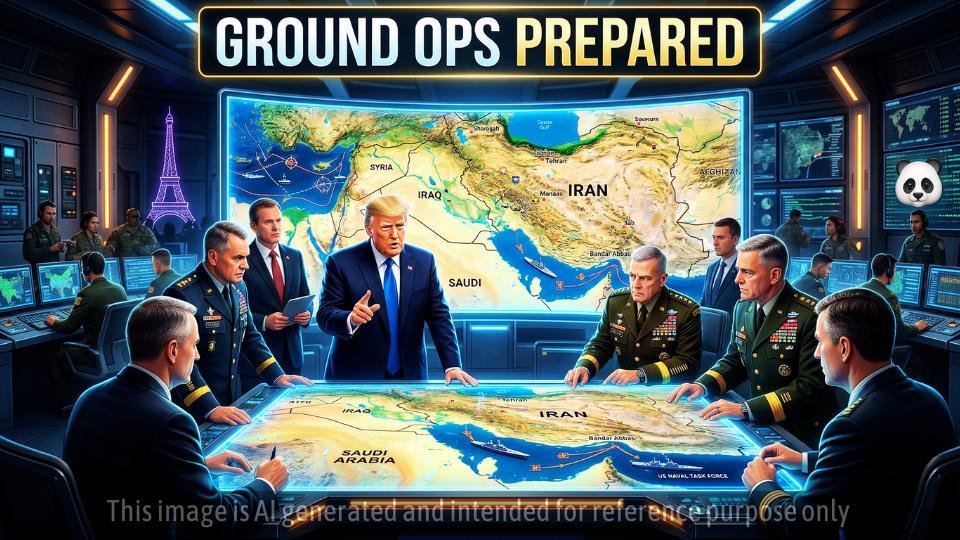
Good evening, world. In a move that has sent ripples of tension across the globe, the United States is orchestrating its largest military deployment in the Middle East in two decades, positioning forces for what appears to be potential ground operations in Iran. This isn’t just another round of political posturing; this is a tangible shift in strategy, a move from threats to tangible preparations for a conflict that could be weeks, or even months, long. Let’s break down every angle of this incredibly delicate and potentially explosive situation.
A Brief Backstory: A Calculated Response?
This dramatic escalation doesn’t come out of a vacuum. For years, the U.S. and Iran have been locked in a tense standoff. Recent direct attacks by the U.S. were met with surprisingly effective and widespread retaliation by Iran, particularly through asymmetric warfare tactics. These retaliatory moves have largely blunted the intended effects of U.S. policy, leaving Washington in a tough spot. Some analysts suggest that the prospect of a ground invasion is a way for the U.S. to “save face” and reassert its dominance in the region. The American goal of a swift regime change has not materialized, forcing a re-evaluation of its strategy.
The Floating Fortress: The USS Tripoli Arrives
The centerpiece of this massive buildup is the arrival of the USS Tripoli, an amphibious assault ship, in the region, carrying over 3,500 U.S. Marines and sailors. But to call the Tripoli just a “ship” would be a gross understatement. It’s a mobile, floating assault base.
Here’s what makes it so formidable:
- Air Power: It’s equipped with advanced F-35B stealth fighter jets and attack helicopters, capable of launching devastating airstrikes.
- Ground Troops: It carries landing craft specifically for amphibious invasions, meaning it can deploy thousands of Marines directly onto enemy shores.
- Independence: The USS Tripoli can operate entirely on its own, without the need for a land base, giving the U.S. incredible flexibility.
This single deployment signals a significant shift towards a state of combat-readiness, adding to the roughly 50,000 U.S. troops already stationed across various airbases in Qatar, the UAE, and Bahrain.
Why Ground Troops? The Limits of Air Power
For years, modern warfare has been dominated by air power, but officials are now considering “boots on the ground” for several key reasons. Airstrikes alone, while powerful, have their limits. They cannot effectively:
- Destroy Deeply Buried Targets: Iran is known to have heavily fortified, underground nuclear facilities that can withstand even powerful bombs.
- Completely Disable the Military: Iran’s military infrastructure is deliberately spread out. Ground forces would be needed to physically capture or destroy these scattered assets.
The proposed plans reportedly focus on limited, surprise raids by Special Operations forces and conventional infantry rather than a full-scale invasion. Potential targets include Kharg Island, which is central to 90% of Iran’s oil exports, and coastal missile sites near the vital Strait of Hormuz.
The Global Price of Conflict
This is about more than just the U.S. and Iran. A potential conflict threatens to shut down the Strait of Hormuz, a narrow waterway through which about 20% of the world’s oil passes. Even a temporary disruption could cause a global panic, sending oil prices skyrocketing and shattering fragile supply chains. The potential for a global economic shock is very real, drawing comparisons to the devastating 1973 oil crisis. One of America’s stated objectives is to ensure this oil flow remains uninterrupted, but the military buildup itself has already caused immense uncertainty.
A Word of Caution
Let’s be clear: a ground war in Iran would be extremely dangerous and unlike any recent conflict. Iran is not a weak opponent. It has mastered asymmetric warfare and has warned that over a million fighters have been mobilized to defend the nation. Their arsenal includes:
- Swarm Tactics: Using a large number of fast attack boats to overwhelm naval ships.
- Naval Mines and Drones: Cheap but highly effective tools to disrupt shipping.
- Ballistic Missiles: Capable of hitting targets across the region.
The White House and Pentagon have given conflicting signals, stating that while options are being prepared, a final decision has not been made by President Donald Trump.[4] There is also significant public opposition within the United States to another prolonged war in the Middle East.
We stand at a critical juncture. The decisions made in the coming days and weeks could lead to a limited, surgical operation, a long and grueling conflict, or a full-scale regional war with catastrophic global consequences. The world watches, holding its breath.
A Social Message: In times of heightened tension, it is easy to focus on military hardware and strategic objectives. However, we must never forget the human element at the heart of any conflict. War is not a game played on a map; it affects real people, families, and communities. The path to lasting security is always through dialogue, understanding, and a commitment to peace. We urge leaders on all sides to pursue every possible diplomatic channel to de-escalate this crisis and avoid a conflict that would bring immeasurable suffering.







Leave a Reply