
कृपया इसे हिंदी में पढ़ने के लिए यहाँ क्लिक करें
A New Vision for a Digital India
Remember 2016? The year when one company, Reliance Jio, single-handedly rewrote the rules of India’s telecom industry. Data became cheaper than ever, and a digital revolution swept across the nation, connecting millions. Fast forward to today, and a similar buzz is in the air. This time, the playground isn’t telecom; it’s the future itself—Artificial Intelligence (AI).
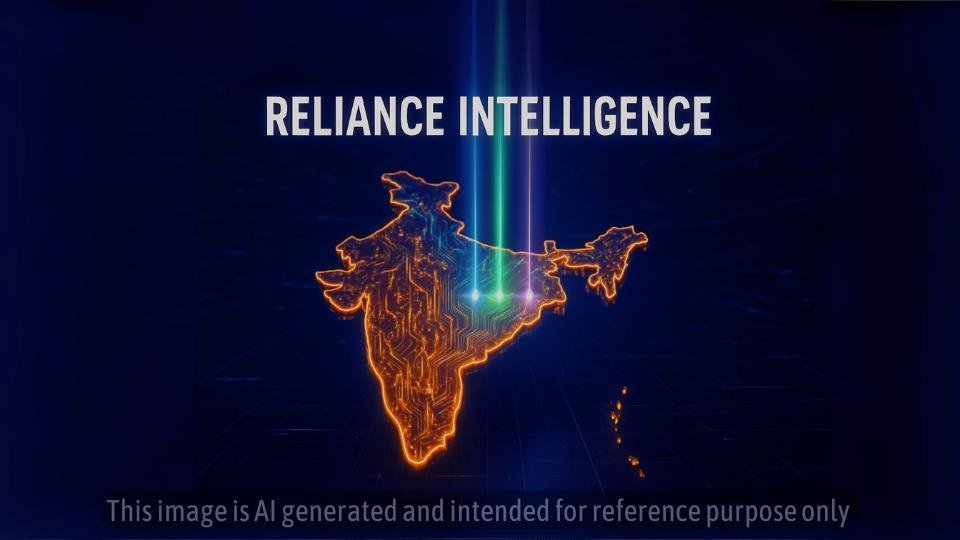
At a recent landmark meeting, Reliance Industries’ chairman, Mukesh Ambani, unveiled a vision that could very well be the next “Jio Moment” for India. The new venture, named Reliance Intelligence, carries a powerful mission statement: “AI for everyone, everywhere.” This isn’t just another corporate announcement; it’s a bold declaration of intent to build India’s own AI engine, potentially shaking up the global tech landscape. But what does this mean for the average Indian, the economy, and the nation’s future? Let’s dive deep into this groundbreaking development.
The Need for an AI Revolution in India
For a long time, experts have pointed out that for any country to truly grow its economy, it needs to be a leader in technology. In today’s world, that technology is AI. However, India, despite its massive talent pool, has been seen as lagging. The country’s spending on Research and Development (R&D) in technology is just around 0.65% of its GDP, which is quite low compared to global leaders.
This is where private companies play a crucial role. While the government has already approved over ₹10,000 crores for its own AI Mission, a push from a giant like Reliance can accelerate everything. This move isn’t just about launching a new product; it’s about creating a domino effect, encouraging more big players and startups to invest heavily in creating AI for India, in India.
The Four Pillars: The Blueprint of Reliance Intelligence
Reliance’s grand plan is built on four solid foundations, each designed to tackle a specific challenge and build a complete AI ecosystem.
- Pillar 1: AI Infrastructure
This is the physical backbone. Reliance is building massive, “gigawatt-scale” data centers in Jamnagar. Think of these as giant brains that will power the entire AI system. What’s unique is that they will run on 100% renewable, green energy, making this a sustainable tech revolution. This infrastructure will handle the enormous amount of data and processing needed for training advanced AI models on a national level. - Pillar 2: Global Partnerships
Reliance isn’t doing this alone. It has formed a powerful alliance with two of the world’s biggest tech giants: Google and Meta (the company behind Facebook, Instagram, and WhatsApp). This collaboration is a game-changer. It brings together the best of all worlds and ensures that the technology is world-class while following an “India-first” policy, meaning it will be customized for Indian needs and comply with Indian data laws. - Pillar 3: AI for All
The goal is to make AI simple, trustworthy, and accessible to everyone. This means creating easy-to-use AI services that can help in key areas like Education, Healthcare, and Agriculture. Imagine a farmer getting real-time advice from an AI on crop health, or a student in a remote village getting access to a world-class AI tutor. That’s the future Reliance Intelligence is aiming for. - Pillar 4: A Talent Hub
An AI revolution needs a skilled army of creators. This pillar is focused on nurturing India’s incredible human potential. By creating a “Talent Hub,” Reliance aims to incubate world-class researchers, engineers, and designers. The focus is on combining “Speed + Rigor” to foster innovation and build a workforce that can make India an AI powerhouse, turning our large population—our demographic dividend—into a highly skilled asset.
The Power Trio: Reliance, Google, and Meta
The collaboration between these three giants is what makes this initiative so powerful. Each brings something unique to the table.
- Reliance brings its vast infrastructure, its massive Jio telecom network with over 500 million users, and its extensive retail customer base. This provides an unprecedented amount of data and a ready-made distribution network.
- Google offers its world-leading AI cloud platform and advanced AI tools, providing the technical muscle.
- Meta, led by Mark Zuckerberg, contributes its powerful open-source AI models, like the Llama models, which can be adapted and trained on Indian data to provide solutions for Indian businesses.
The partnership with Meta is structured as a joint venture, with Reliance holding a 70% stake and Meta holding 30%, backed by an initial investment of about ₹855 crore ($100 million).
What This Means for India’s Startups and Jobs
While a giant’s entry might seem intimidating, it could actually be a huge boost for the startup ecosystem. Reliance Intelligence aims to create a platform that startups can use to build their own AI applications. It provides the expensive infrastructure and powerful models, so smaller companies can focus on innovation without massive upfront costs.
On the jobs front, the picture is promising. Projections show that India will have over 2 million AI-related job openings by 2027. The problem, however, is a shortage of skilled professionals. Reliance’s focus on creating a Talent Hub (Pillar 4) directly addresses this gap by training people for the jobs of the future.
New Gadgets for a New Era: JioPC and JioFrames
To show how this AI can be integrated into our daily lives, Reliance also gave a sneak peek at two new products:
- JioPC: An AI-ready computer that relies on the cloud for its processing power. This means you can have a powerful computing experience on a simple device, as all the heavy work is done in Reliance’s data centers.
- JioFrames: AI-powered smart glasses that blend the digital and real worlds, opening up new possibilities for how we interact with information.
A Word of Caution: The Monopoly Question
Whenever a player as large as Reliance makes such a disruptive move, questions about monopolies naturally arise. The company’s growth has been compared to that of historical giants like Rockefeller’s Standard Oil. The key will be to ensure that while Reliance Intelligence leads the way, it also fosters a competitive and fair market where startups and other companies can thrive. The “open-source” approach with partners like Meta is a positive sign, suggesting a collaborative rather than a controlling model.
The Road Ahead
Mukesh Ambani’s Reliance Intelligence is more than just a business venture; it is a vision for India’s technological sovereignty. It’s an ambitious bet that could place India at the center of the global AI map, create millions of jobs, and bring the benefits of AI to every corner of the country. Just like Jio brought the internet to the masses, Reliance Intelligence aims to bring artificial intelligence to every Indian. The journey has just begun, and the world is watching closely.
Disclaimer: This blog post is for informational and educational purposes only and is based on publicly available information from news reports and company announcements as of the date of publication. The views and opinions expressed in this article are those of the author and do not necessarily reflect the official policy or position of any organization, company, or individual mentioned. While we strive for accuracy, we make no representations or warranties of any kind, express or implied, about the completeness, accuracy, reliability, suitability, or availability of the information contained herein. Any reliance you place on such information is therefore strictly at your own risk.
This article should not be construed as financial, investment, or business advice. The mention of specific companies like Reliance, Meta, or Google does not constitute an endorsement. Readers are encouraged to conduct their own research and consult with professional advisors before making any decisions based on the content of this article. The future developments of “Reliance Intelligence” and its impact on the market may differ from the analysis and projections presented here. The author and the publication are not liable for any losses or damages arising from the use of this information.








Leave a Reply