
कृपया इसे हिंदी में पढ़ने के लिए यहाँ क्लिक करें
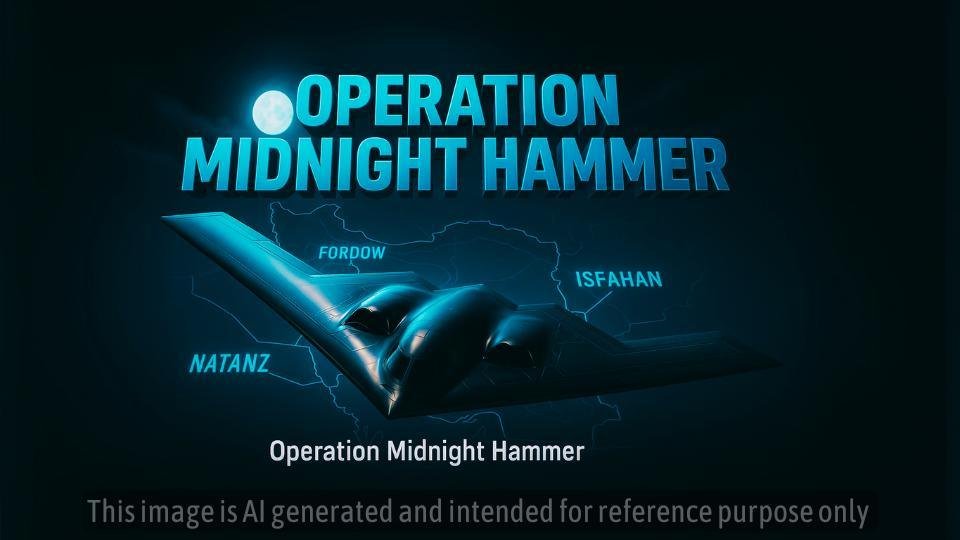
In a high‑stakes military action in the early hours of June 22, 2025, the U.S. executed Operation Midnight Hammer, targeting Iran’s nuclear sites at Fordow, Natanz, and Isfahan. The mission, ordered by President Donald Trump, involved a coordinated strike combining seven B‑2 Spirit stealth bombers, over 125 aircraft, and a submarine launching Tomahawk missiles.
Precision, power, and planning
- The heart of the operation: 14 GBU‑57 Massive Ordnance Penetrators (“bunker busters”) were deployed—first combat use ever—striking Fordow and Natanz.
- Simultaneously, over two dozen Tomahawks hit surface facilities in Isfahan.
- To conceal the attack, decoy B‑2 flights headed west over the Pacific while the real force flew east—an 18‑hour flight with mid‑air refueling.
- The U.S. military emphasized a “surgical, non‑escalatory” approach—focusing only on nuclear infrastructure, avoiding civilian and military casualties.
Official positions
- Defense Secretary Pete Hegseth called it “bold and brilliant,” saying it “obliterated” Iran’s nuclear ambitions.
- Chairman Gen. Dan Caine confirmed “severe damage” but cautioned that final assessments are pending.
- The operation was lauded by Vice President J.D. Vance for its “flawless coordination”.
Iran’s response and global ripples
- Iran downplayed the damage, calling it “superficial,” and said nuclear materials were moved out beforehand.
- The IAEA reported heavy damage at all sites but no radiation spike.
- Iran vowed possible retaliation; Iran’s parliament discussed closing the Strait of Hormuz.
- Israel raised air‑defense posture; the U.S. pulled non‑essential embassy staff from Lebanon, while the UN Security Council convened an emergency session.
Why it matters
- Military milestone – largest B‑2 mission, longest bomber flight since 2001, and first real use of massive bunker busters.
- Strategic statement – meant to deter Iran and demonstrate U.S. military resolve without launching a full war.
- Political implications – critics question legality: Democrats and some Republicans argue it lacked congressional approval.
- Nuclear diplomacy at risk – while it may delay Iran’s nuclear work, experts warn it could push Iran closer to weapons development.








Leave a Reply