
कृपया इसे हिंदी में पढ़ने के लिए यहाँ क्लिक करें
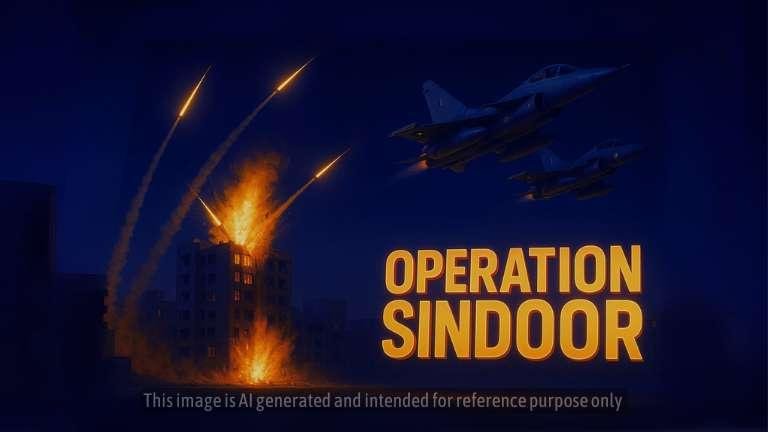
On May 7, 2025, India launched Operation Sindoor, which lasted 25 minutes from 1:05 am to 1:30 am, a carefully planned military operation targeting nine terror camps in Pakistan and Pakistan-Occupied Kashmir (PoK). This operation was a direct response to the horrific terror attack in Pahalgam, Jammu and Kashmir, on April 22, 2025, which claimed 26 Hindu lives, including 25 Indian citizens and one Nepali national. The operation has sparked reactions from both nations and the world, raising concerns about escalating tensions between the nuclear-armed neighbors. Here’s a detailed look at the events, their background, and their impact.
Backstory: The Pahalgam Attack That Ignited the Fire
On April 22, 2025, a serene meadow in Pahalgam, Kashmir, turned into a nightmare. Armed terrorists from The Resistance Front (TRF)—a group India claims is a proxy for Pakistan-based Lashkar-e-Taiba (LeT)—opened fire on Hindu tourists, killing 26 people, including a Nepali citizen. Survivors described the attackers executing victims with close-range headshots, leaving families traumatized. This marked the deadliest terrorist attack on civilians in Kashmir since the 2008 Mumbai attacks.
India accused Pakistan of sheltering TRF and LeT, a charge Pakistan denied, calling for a “neutral investigation”. Tensions escalated rapidly: India suspended the Indus Waters Treaty, while Pakistan threatened to exit the Simla Agreement.
Why “Sindoor”? Symbolism Meets Strategy
The operation’s name carries dual symbolism:
- Cultural : Sindoor represents sacrifice and unity in Indian traditions, signaling India’s unwavering stance against terror. Also named after the vermilion symbolizing marital commitment in Indian culture, the operation aimed to “avenge the widows of Pahalgam”.
- Political : A subtle warning to Pakistan, dubbed a “safe haven for terrorists ” by Indian officials, to abandon proxy wars.
Operation Sindoor: Striking Back
Two weeks later, India responded with Operation Sindoor, a precision military operation aimed at dismantling terror infrastructure. On May 7, 2025, the Indian armed forces, including the Army, Navy, and Air Force, conducted 24 missile strikes on nine terror sites in Pakistan and PoK. The operation, which lasted 25 minutes from 1:05 am to 1:30 am, was executed entirely from Indian territory using sophisticated weapons, including loitering munitions.
Targets and Execution
Operation Sindoor was a coordinated effort by the Army, Air Force, and Navy, using advanced precision weapons like the SCALP cruise missile, HAMMER smart bombs, and loitering munitions (kamikaze drones). The nine terror sites destroyed belonged to banned groups Jaish-e-Mohammed (JeM), Lashkar-e-Taiba (LeT), and Hizbul Mujahideen (HM):
- In Pakistan:
- Markaz Subhan Allah, Bahawalpur (JeM)
- Markaz Taiba, Muridke (LeT)
- Mehmoona Joya, Sialkot (HM)
- Sarjal, Tehra Kalan (JeM)
- In Pakistan-occupied Kashmir (PoK):
- Markaz Ahle Hadith, Barnala (LeT)
- Markaz Abbas, Kotli (JeM)
- Maskar Raheel Shahid, Kotli (HM)
- Shawai Nalla Camp, Muzaffarabad (LeT)
- Syedna Bilal Camp, Muzaffarabad (JeM)
India was careful to avoid Pakistani military installations, demonstrating restraint and focusing only on terror infrastructure. The operation was monitored overnight by PM Modi himself, underlining its importance.
These locations were identified as hubs for planning cross-border attacks against India. Indian sources reported that over 70 terrorists were killed and more than 60 injured, significantly weakening the operational capabilities of these groups. Notably, JeM chief Maulana Masood Azhar claimed that 10 family members and four aides were killed in the strikes.
The Indian government emphasized that the operation was “focused, measured, and non-escalatory,” avoiding Pakistani military facilities to prevent a larger conflict. Defence Minister Rajnath Singh stated, “We only killed those who killed our innocents,” highlighting the operation’s targeted nature.
Reactions: A Tense Standoff
India’s Perspective
The Indian government, led by Prime Minister Narendra Modi, called Operation Sindoor a proud moment, reflecting the nation’s resolve against terrorism. Modi praised the armed forces during a Cabinet meeting, and an all-party meeting was scheduled for May 8, 2025, to discuss the situation. Union Home Minister Amit Shah briefed chief ministers of border states, and mock drills were conducted across India to ensure preparedness.
National Security Advisor Ajit Doval briefed his counterparts on actions taken and method of execution, which was measured, non-escalatory and restrained. He emphasised that India had no intent to escalate but was well prepared to retaliate resolutely should Pakistan decide to escalate.
India also briefed the United Nations Security Council (UNSC) and other nations, excluding Pakistan, to explain the operation’s objectives. Foreign Secretary Vikram Misri described the strikes as “proportionate and responsible,” aimed at dismantling terrorist infrastructure.
Pakistan’s Response
Pakistan strongly condemned the operation, with Prime Minister Shehbaz Sharif calling it a “blatant act of war.” Pakistani officials claimed that 26 civilians were killed and 46 injured, accusing India of targeting civilian areas. The Pakistani military reported strikes in Punjab and PoK and vowed to retaliate “at a time and place of its choosing.” There were also unverified claims that Pakistan downed five Indian planes, which India has not addressed.
Misinformation spread rapidly, with Pakistani media and X accounts claiming retaliatory strikes on Indian targets, such as Srinagar Air Base. These claims were flagged as false by independent analysts, lacking credible evidence.
Historical Context: A Pattern of Response
Operation Sindoor follows a pattern of India’s military responses to cross-border terrorism. In 2016, after the Uri attack, India conducted surgical strikes on terror camps in PoK. In 2019, following the Pulwama attack, Indian airstrikes targeted a JeM camp in Balakot, Pakistan. These operations, like Operation Sindoor, aimed to send a strong message against terrorism while avoiding full-scale conflict.
The India-Pakistan relationship has been strained since their partition in 1947, with conflicts over Kashmir fueling tensions. The revocation of Article 370 in 2019, which ended Jammu and Kashmir’s special status, further complicated matters, with groups like TRF emerging to oppose Indian policies.
Looking Ahead
Operation Sindoor marks a significant moment in India-Pakistan relations, highlighting the persistent challenge of terrorism and the delicate balance needed to maintain peace. While India asserts its right to counter terrorism.









Leave a Reply