
कृपया इसे हिंदी में पढ़ने के लिए यहाँ क्लिक करें
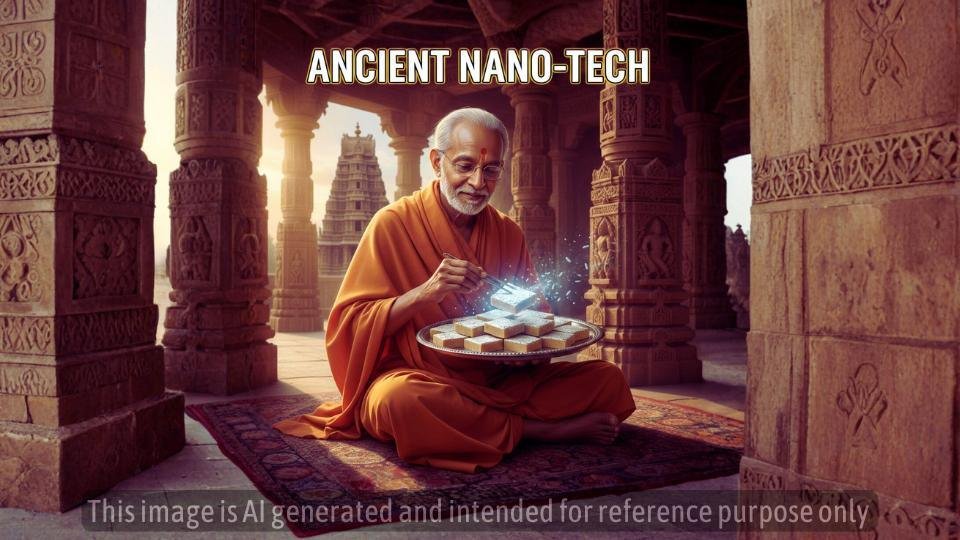
Have you ever looked at a gleaming piece of Kaju Katli or a festive sweet covered in a delicate, shiny layer and wondered, “Are we really supposed to eat that metal?” It might seem strange, a mere decoration to make the food look pretty. But what if I told you this tradition is not about looks, but is a brilliant piece of ancient science—a secret that kept food safe and healthy long before refrigerators were ever invented?
This shimmering layer, known as vark, is not just any metal. When it’s pure, it’s a form of edible silver, and its purpose is far more important than decoration. Let’s dive into the fascinating story of this ancient nanotechnology.
A Backstory: The Problem of Spoilage
Indian sweets, especially those made from milk products like mawa and nuts like cashews, are delicious but spoil very quickly. In a warm climate, they are a perfect breeding ground for bacteria and fungi, which can cause food poisoning. Our ancestors, being incredibly observant and intelligent, needed a way to preserve these delicacies, especially during long festivals and journeys. Their solution was simple, yet revolutionary: silver.
The Scientific Secret: The Oligodynamic Effect
The magic behind silver lies in a scientific principle called the “Oligodynamic Effect.” This sounds complicated, but the idea is simple. At very low concentrations, ions of certain metals, like silver, are toxic to microbes like bacteria and fungi but are harmless to humans.
Think of silver ions as tiny, powerful soldiers. When they come into contact with bacteria, they perform a kind of “surgical strike”:
- They Break Down the Wall: Silver ions puncture the protective cell walls of bacteria.
- They Stop them from Breathing: Once inside, they interfere with the bacteria’s enzymes, essentially stopping them from breathing and multiplying.
This powerful antimicrobial property made silver the world’s first antibacterial food wrap, keeping sweets fresh and safe to eat for weeks. It was an ancient bio-shield, protecting food and people.
Not Just a Preservative, But a Medicine!
The wisdom of using silver didn’t stop at preservation. According to Ayurveda, India’s ancient system of medicine, pure silver has numerous health benefits. It is known to have a cooling (Sheetal) effect on the body, which can help reduce acidity and calm the digestive system. So, that piece of silver on your sweet was also a small dose of medicine!
This is why, in ancient times, silver was not just used in food. It was also applied to the wounds of soldiers on the battlefield. The silver would keep infections at bay, helping the wounds heal faster. It was a life-saving application of this remarkable metal.
A Serious Warning: Know Your Vark!
Now, for a crucial piece of modern-day advice. The incredible benefits we’ve discussed apply only to 99.9% pure silver vark. Unfortunately, in today’s market, many sellers use cheap, machine-made aluminum foil instead.
Aluminum is not the same as silver. It is a heavy metal that is toxic and can accumulate in the body over time, potentially leading to serious health problems. It offers none of the antibacterial or health benefits of real silver. It’s just a cheap, dangerous imitation.
A Simple Test to Tell the Difference:
- Rub it: Real silver vark is so delicate that if you rub it between your fingers, it will dissolve into the skin completely. Fake aluminum foil will just roll up into a small, greasy ball.
- Burn it: If you place the vark on a flame, real silver will burn away and leave behind a small, shiny ash. Aluminum will just burn into a dark grey, non-shiny residue.
A Message From Our Past to Our Future
The next time you enjoy a sweet decorated with real silver vark, take a moment to appreciate the incredible wisdom of our ancestors. What we might dismiss as a simple tradition is actually a testament to their deep understanding of science, nature, and medicine. They created nanotechnology thousands of years ago, using it to make life healthier and safer.
So let’s honor this legacy. Let’s choose pure, traditional methods and reject cheap, harmful substitutes. Our traditions are not just rituals; they are a treasure trove of scientific knowledge waiting to be rediscovered.





Leave a Reply