
कृपया इसे हिंदी में पढ़ने के लिए यहाँ क्लिक करें
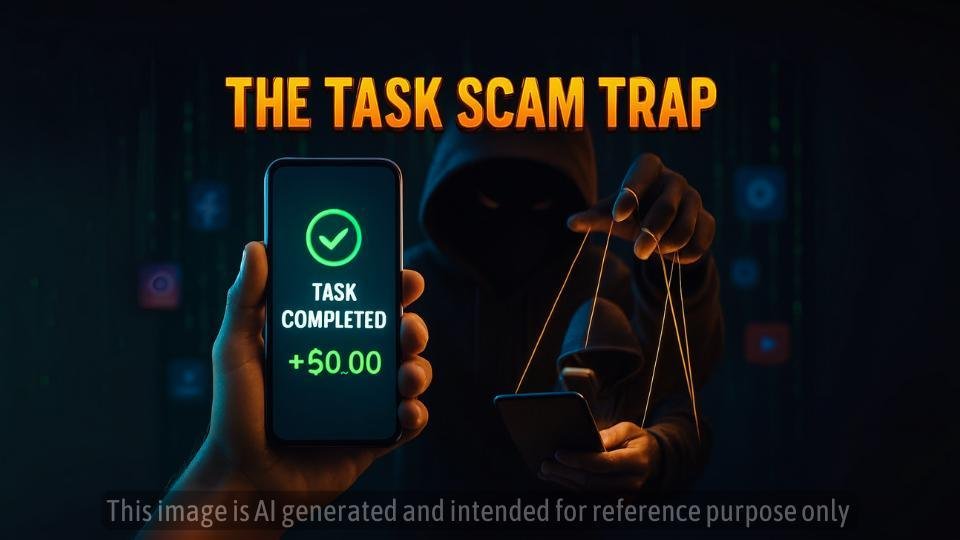
Task-based scams are emerging as one of the most devastating and fastest-growing online frauds in India. Disguised as simple work-from-home opportunities, these scams lure unsuspecting individuals with the promise of easy money for performing minor online tasks. However, behind this facade lies a sophisticated criminal network that masterfully exploits human psychology, manipulates trust, and ultimately leaves its victims in financial and emotional ruin.
This investigative report delves deep into the anatomy of task-based scams—how they operate, the psychological triggers they exploit, and the critical red flags that everyone needs to recognize. Our goal is to arm you, your family, and your community with the knowledge to stay protected from these ruthless online predators.
What is a Task-Based Scam?
At its core, a task-based scam—often referred to as a “Telegram scam,” “WhatsApp part-time job scam,” or “micro-task fraud”—offers victims simple online assignments. These activities seem harmless and require minimal effort:
- Liking YouTube videos or subscribing to channels.
- Writing positive product reviews on e-commerce sites.
- Rating hotels and restaurants on platforms like Google Maps.
- Completing small data-entry style assignments.
The process begins innocently. Victims receive small, quick payments for completing their first few tasks, creating a powerful sense of legitimacy and trust. But this is just the bait. The scam quickly escalates, asking victims to deposit their own money to access “VIP tasks” or unlock higher earnings. Once a significant amount of money has been invested, the fraudsters vanish, block the victim, and leave them trapped in a devastating financial and emotional vortex.
The Anatomy of the Scam: A Deceptive Journey from Hope to Despair
The scam unfolds in meticulously planned stages, designed to hook the victim and make it psychologically difficult to escape.
- The Bait: It starts with an unsolicited message on WhatsApp or a social media ad promising an easy way to earn thousands daily. The initial tasks are incredibly simple, and the promised reward, usually between ₹100 to ₹300, is transferred almost instantly. This initial payout is crucial—it dismantles skepticism and builds a foundation of trust. The victim thinks, “It’s legitimate. I got paid.”
- The Hook: After building confidence, the scammers invite the victim to a Telegram or WhatsApp group filled with other “participants.” They introduce the concept of “prepaid tasks.” To earn more, the victim must first deposit a small amount (e.g., ₹1,000) to unlock a task that promises a higher return (e.g., ₹2,200). In this phase, the scammers often allow the victim to withdraw this larger amount, further cementing the belief that the system is real and profitable.
- The Trap: This is where the real scam begins. The deposit amounts escalate dramatically. To earn ₹5 lakhs, a victim might be asked to deposit ₹50,000 first. In the group, other members (who are actually part of the scam) post screenshots of their massive earnings, creating intense FOMO (Fear of Missing Out). Once the victim deposits a large sum, their account is suddenly frozen.
- The Never-Ending Cycle: To unfreeze the account, the scammer claims the victim must pay additional fees—GST, withdrawal charges, or a security deposit. Each payment is met with another excuse and a demand for more money. Victims, desperate to recover their initial investment, often fall deeper into the trap, sometimes borrowing money or using their life savings. Finally, when the victim can no longer pay, the scammers block them, and the group disappears. The money is gone forever.
The Mind Games: Psychological Tricks That Make the Scam So Effective
Scammers are masters of manipulation. They don’t just steal money; they exploit predictable patterns in human behavior.
- Sunk Cost Fallacy: This is the feeling that you’ve already invested too much time and money to quit. Victims think, “I’ve already put in ₹50,000. If I just pay this last ₹20,000 fee, I can get all my money back.” This logic keeps them trapped.
- Loss Aversion: Psychologically, the pain of losing is twice as powerful as the pleasure of gaining. Scammers know this. Once a victim’s money is stuck, their primary motivation is no longer to earn a profit but to avoid the pain of losing their initial investment. This desperation makes them vulnerable to further demands.
- FOMO (Fear of Missing Out): The fake participants in the group who constantly share screenshots of their earnings create a sense of urgency and envy. Victims start to believe that everyone else is succeeding and that they are the only ones missing out, pushing them to take irrational financial risks.
The Tragic Human Cost: Real Stories of Loss and Despair
The consequences of these scams go beyond financial loss; they shatter lives.
- In Gujarat, Bhumika Sorathia, a 25-year-old bank employee, tragically took her own life after losing ₹28 lakh in a task scam. She had urged her parents to withdraw their provident fund savings, believing she could multiply the money.
- A 40-year-old agriculture officer in Nashik ended his life after being defrauded of ₹56 lakh through a similar scam that started with a friend request on social media.
- Similar tragic stories have emerged from Hyderabad and Bengaluru, where individuals have lost everything, from ₹1 lakh to ₹13 lakh, falling prey to these meticulously planned frauds.
These stories highlight the devastating emotional toll these scams take, proving that they are far from victimless crimes.
How to Spot a Task-Based Scam: The Red Flags You Cannot Ignore
Vigilance is your best defense. Here are the clear warning signs:
- Guaranteed High Returns for Simple Tasks: If an offer seems too good to be true, it always is. No legitimate company pays hundreds of rupees for liking a video.
- Requests for Deposits: A real job pays you; it never asks you to pay first. Any request for a “registration fee,” “security deposit,” or “prepaid task” is a massive red flag.
- Pressure and Urgency: Scammers create a sense of urgency to prevent you from thinking clearly. Deadlines like “You must deposit in 15 minutes or you’ll lose your earnings” are common tactics.
- Unprofessional Communication: Look for grammatical errors, strange wording, and communication that happens exclusively on informal platforms like WhatsApp or Telegram.
- Anonymous Bank Accounts: Legitimate businesses use official company accounts. Scammers use personal bank accounts or a constantly changing series of accounts to receive money.
What Should You Do? A Message to Everyone
If you have fallen victim to such a scam, remember that you are not alone, and it is not your fault. These criminals are professionals who exploit trust.
- Speak Up: Do not suffer in silence due to shame. Talk to your family and friends. The emotional support is crucial.
- Report Immediately: The very first step is to report the incident to the National Cyber Crime Reporting Portal (cybercrime.gov.in) or call the helpline number 1930. The sooner you report, the higher the chances of freezing the funds.
- Spread Awareness: Share this information. By educating others, you can prevent them from becoming the next victim. The first step towards prevention is awareness.
Let us build a community where we talk about these dangers openly and support each other, ensuring that these scams find no more victims in our society.









Leave a Reply