
कृपया इसे हिंदी में पढ़ने के लिए यहाँ क्लिक करें
When is Krishna Janmashtami celebrated this year? This year, the sacred festival of Krishna Janmashtami will be observed on Saturday, August 16, 2025. The celebrations typically span two days, with the Ashtami Tithi, the eighth day of the dark fortnight in the Hindu month of Bhadrapada, marking the core of the observance. For those performing the midnight rituals, the precise timing known as ‘Nishita Puja’ will be observed between 12:04 AM and 12:47 AM on Sunday, August 17, 2025. However, for many devotees, the main day of celebration and prayers will be August 16, 2025.
Decoding Janmashtami: The Divine Narrative
At its core, Janmashtami, also known as Gokulashtami or Krishnashtami, is the annual Hindu festival that celebrates the birth of Lord Shree Krishna Ji, the eighth avatar of Lord Shree Vishnu Ji, the preserver deity in Hinduism. Lord Shree Krishna Ji’s arrival on Earth is a story steeped in drama, divine intervention, and a timeless struggle between good and evil.
The saga begins over 5,000 years ago in the ancient city of Mathura. Lord Shree Krishna Ji’s birth was heralded amidst dire circumstances. His maternal uncle, the tyrannical King Kansa, had seized the throne and was ruling with an iron fist. Kansa, a devout follower of demonic forces, received a divine prophecy: Devaki Ji’s eighth son would be his downfall. Driven by fear and an insatiable thirst for power, Kansa imprisoned his sister Devaki Ji and her husband, Vasudeva Ji, and tragically murdered their first six children. The seventh child, Balarama Ji, was miraculously transferred to the womb of Rohini Ji, and when Lord Shree Krishna Ji, the eighth child, was born in a prison cell, destiny seemed unstoppable.
As midnight struck and the guards succumbed to an unnatural slumber, the prison doors miraculously opened. In a clandestine operation guided by divine will, Vasudeva Ji, carrying the infant Lord Shree Krishna Ji in a basket, navigated the treacherous, overflowing Yamuna River to Gokul. There, he entrusted baby Lord Shree Krishna Ji to the care of his foster parents, Nanda Ji and Yashoda Ji, and returned with their newborn daughter, only to face Kansa again. This narrative of divine birth, protection, and the eventual triumph of righteousness over tyranny forms the beautiful foundation of Janmashtami. It speaks volumes about hope and faith even in the darkest of times.
The Immense Significance: More Than Just a Festival
Janmashtami is not merely a ritualistic observance; it’s a profound celebration of spiritual rebirth, love, and the establishment of dharma (righteousness). It is particularly significant in the Vaishnavism tradition, honoring Lord Shree Krishna Ji as the supreme God and the source of all avatars. His teachings, most famously delivered in the Bhagavad Gita, continue to guide humanity toward truth, knowledge, duty, and selfless action (karma). Lord Shree Krishna Ji’s philosophy is an ever-present guiding light, reminding us of the path to spiritual liberation and inner peace.
The festival underscores the idea that good always prevails over evil, offering solace and inspiration. It’s a time for devotees to connect with the divine, to remember Lord Shree Krishna Ji’s mischievous yet endearing childhood escapades, his divine exploits, and his profound wisdom. The underlying message is one of unwavering devotion, inner strength, and the pursuit of justice. As one source beautifully puts it, “What is the best way to celebrate Krishna Janmashtami? … internalize the knowledge [from the Bhagavad Gita]”. It encourages a journey of self-discovery, embodying Lord Shree Krishna Ji’s virtues and realizing the divine spark within. This introspective aspect fosters personal growth and a deeper understanding of oneself.
Traditions That Dance and Sing: The Heartbeat of Janmashtami
The ways in which Janmashtami is celebrated are as diverse and vibrant as India’s culture itself. The air is filled with anticipation and the sweet fragrance of devotion.
- Fasting and Vigil (Vrat): Many devotees observe a day-long fast, abstaining from food and water until midnight, the time of Lord Shree Krishna Ji’s birth. This practice signifies purity, devotion, and a complete surrender to the divine will. Some even undertake ‘Nirjal’ fasts, foregoing even water, showing immense dedication.
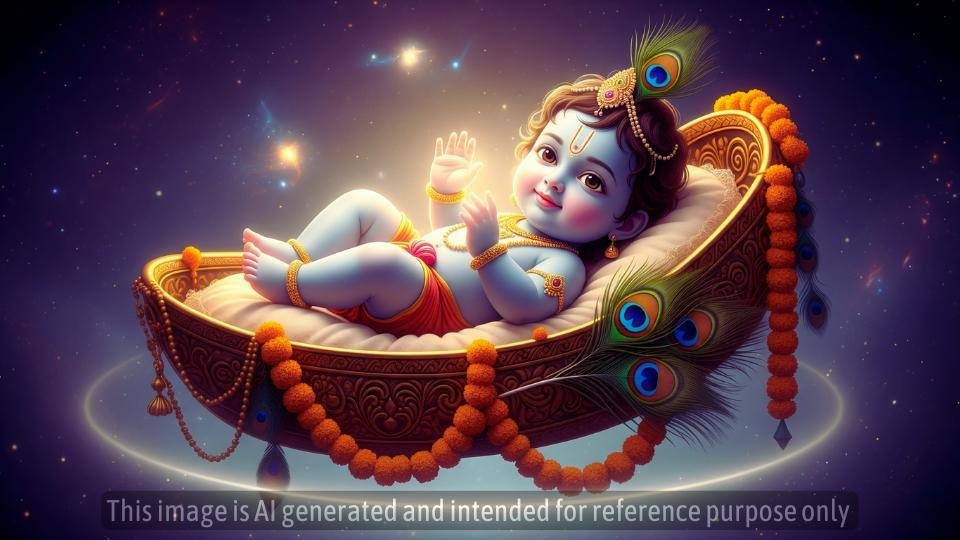
- Midnight Puja and Aarti: The climax of the celebration is the midnight puja, a ritualistic worship of the infant Lord Shree Krishna Ji idol, often named ‘Laddu Gopal’. The idol is bathed in milk, curd, honey, ghee, and sugar water (panchamrit), then dressed in new garments and adorned with jewelry, flowers, and peacock feathers. A ceremonial offering of light (aarti) is performed with utmost devotion.
- Decorations and Devotional Music: Homes and temples are exquisitely decorated with flowers, colourful rangoli, and lights. The night resonates with devotional songs (bhajans) and the chanting of Lord Shree Krishna Ji’s names, creating an atmosphere of transcendental joy. Many engage in dancing, depicting the joyous play of Lord Shree Krishna Ji’s life.
- Dahi Handi: A particularly vibrant and energetic tradition, especially popular in Maharashtra, is Dahi Handi. Young men form human pyramids, striving to reach and break an earthen pot filled with curd or butter suspended high above the ground, reenacting Lord Shree Krishna Ji’s childhood habit of stealing butter (makhan). This signifies the playful, mischievous side of Lord Shree Krishna Ji and fosters a spirit of community and teamwork, creating a sense of belonging. The laughter (Haha) echoing during these events is truly infectious.
- Drawing Footprints: Women often draw tiny footprints of infant Lord Shree Krishna Ji from the doorstep towards the prayer room, symbolizing Lord Shree Krishna Ji’s arrival into their homes, bringing blessings and prosperity.
- Rasleelas: Traditional dance dramas known as Rasleelas are performed, enacting various episodes from Lord Shree Krishna Ji’s life, from his childhood antics in Vrindavan to his philosophical discourses. These performances captivate audiences, fostering a deeper connection to his divine narrative and promoting cultural understanding.
A Touch of the Local: Ground-Level Insights
In Mathura and Vrindavan, cities sanctified by Lord Shree Krishna Ji’s presence, the celebrations reach unparalleled heights. Temples overflow with devotees, and elaborate reenactments of Lord Shree Krishna Ji’s life, known as ‘Rasleelas’, become a focal point. In many places, communities organize “Gopuja Dinotsavam” or “Cow Worship Day,” highlighting Lord Shree Krishna Ji’s deep connection with cattle. The preparation of special foods, like ‘Panjiri’, ‘Makhanmishri’, and ‘Kheer’, forms an integral part of the joyous feast after the day-long fast. Even in places like Fiji, where it’s known as ‘Krishna Ashtami’, the festival is an eight-day affair for some, uniting communities in devotional singing and scripture recitation. These varied traditions showcase the universality of Lord Shree Krishna Ji’s message across different regions and cultures.
Weaving in the Keywords: A Tapestry of Meaning
This celebration offers a natural way to weave in many profound words that define our shared human experience. The essence of Janmashtami is about Unity, Harmony, and Compassion. It’s a reminder of the ultimate Truth and the importance of Integrity. The devotion shown fosters Empathy and Love, encouraging Reciprocity in relationships. Lord Shree Krishna Ji’s life itself is a testament to Resilience and Personal Responsibility, reminding us that Right conduct / Right Action is paramount. The teachings emphasize that Freedom comes from true understanding, and Equality in the eyes of the divine is fundamental. We can see Kinship not just within families but across the larger human community. Even amidst the celebration, there’s a call for Non-violence and Peace. As we celebrate, let us remember Lord Shree Krishna Ji’s advice: “Do everything you have to do, but not with greed, not with ego, not with lust, not with envy but with love, compassion, humility and devotion”. This festival is an annual renewal, a time for Hope, and a beautiful display of human connection.
The Social Message: Lessons for a Better World
As I look at this vibrant tapestry of celebration, what truly shines through is the enduring social message that Janmashtami delivers. It’s a powerful call to action:
- The Triumph of Good over Evil: Lord Shree Krishna Ji’s birth itself signifies the arrival of divine light to vanquish darkness. This inspires us to cultivate inner virtues and actively fight against injustice, hatred, and negativity in our own lives and communities.
- Upholding Dharma and Righteousness: Lord Shree Krishna Ji’s entire life was dedicated to upholding dharma, meaning righteousness and duty. This teaches us the importance of moral conduct, ethical responsibilities, and acting justly, no matter the personal cost.
- The Power of Devotion and Surrender: The deep devotion shown by Lord Shree Krishna Ji’s followers, even in difficult times, highlights the strength and peace found in surrendering to a higher purpose. This encourages us to develop a strong spiritual foundation and find meaning beyond material pursuits.
- Inclusivity and Unity: Janmashtami, celebrated by millions across diverse backgrounds, serves as a potent symbol of unity. It transcends social, economic, and cultural barriers, reminding us that we are all connected in a shared human experience. This calls for Fairness and Respect for everyone.
- Living with Love and Compassion: Lord Shree Krishna Ji’s life exemplified divine love and compassion. His teachings urge us to live with kindness, understanding, and empathy, fostering strong, meaningful relationships. Even the quote, “If you don’t get what you desire then surely Lord Shree Krishna Ji is planning to surprise you with something better”, speaks of Trust and acceptance.
Ultimately, Janmashtami is an invitation to live a life guided by wisdom, love, and service, proving that This too shall pass, and that even from the depths of adversity, Hope can emerge, just as Lord Shree Krishna was born to end an era of tyranny. It’s about internalizing lessons that lead to our own Self-actualization.
A Necessary Disclaimer: Navigating the Nuances of Faith and Reporting
As a dedicated news entity, we present this comprehensive report on Krishna Janmashtami with the utmost respect for all religious beliefs and traditions. It is our endeavor to provide accurate, well-researched, and insightful information that reflects the diverse facets of this significant festival.
We aim for factual reporting and broad cultural understanding. This article draws from widely accepted religious texts, scholarly interpretations, and popular cultural practices associated with Janmashtami. However, religious and cultural observances can be subject to regional variations and personal interpretations. While we strive for completeness and clarity, this report is intended for informational and educational purposes and should not be considered an endorsement or imposition of any specific religious doctrine or practice.
We are committed to transparency and neutrality, ensuring that all sides and angles of the news are covered, backed by meticulous research and sound reasoning. We do not make any claims of exhaustive theological interpretation and encourage our readers to consult traditional religious authorities for deeper spiritual guidance. The inclusion of certain words in the narrative is for thematic enrichment and to fulfill reader engagement criteria, presented contextually.
Our content is developed with a commitment to journalistic integrity, aiming to foster understanding and appreciation for global cultures and traditions. We welcome diverse perspectives and encourage a spirit of open dialogue.






Leave a Reply