
कृपया इसे हिंदी में पढ़ने के लिए यहाँ क्लिक करें
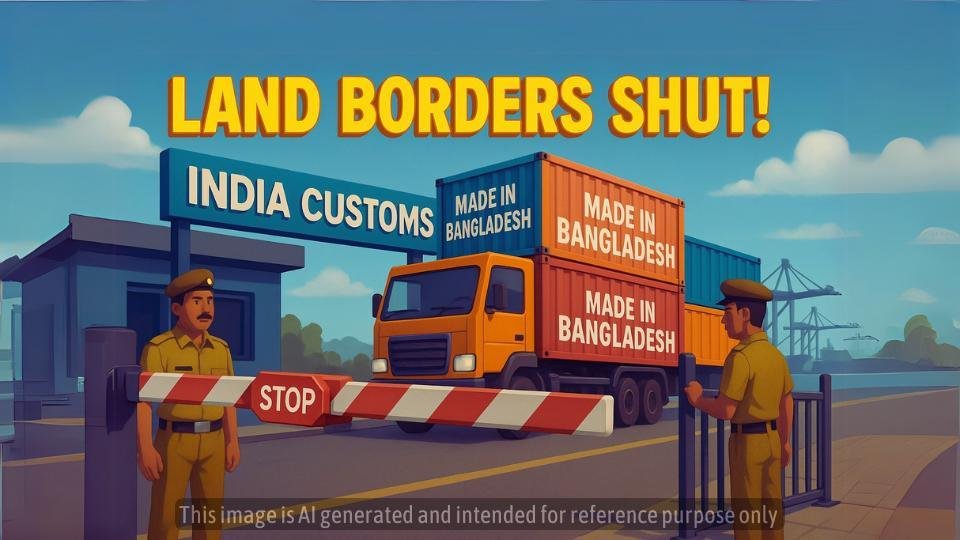
On May 17, 2025, New Delhi issued a notification barring several categories of Bangladeshi consumer goods—most notably ready-made garments—from entering India via land borders in the Northeast, instead forcing them through the seaports of Kolkata and Nhava Sheva. Framed as a reciprocal measure to Bangladesh’s own restrictions on Indian exports, the move aims to restore equality in bilateral trade ties. While essential items like fish and LPG remain exempt, this directive affects an estimated USD 770 million (≈42 %) of Bangladesh’s exports to India, reshaping economic dynamics in the border states and sparking debate among policymakers, traders, and experts alike.
Background and Context
Historical Trade Ties
India and Bangladesh share over 4,000 km of border and long-standing economic links, especially via the “Transit Agreement” that allowed Bangladeshi goods to move through Indian territory to Nepal and Bhutan. Since 2011, Bangladesh’s exports to India grew steadily, driven largely by the Northeast’s demand for garments, processed foods, and furniture.
Past Imbalances
Nevertheless, India has often complained of cumbersome inspections and selective denials by Bangladesh on Indian yarn and rice. Conversely, Bangladesh felt market-access asymmetries, believing the Northeast was treated as a captive market. These frictions set the stage for reciprocal trade actions in May 2025.
Recent Developments
Government Notification
- Date Issued: May 17, 2025.
- Key Directive: Bangladeshi ready-made garments, plastics, wooden furniture, carbonated drinks, processed foods, fruit-flavoured drinks, cotton and cotton-yarn waste may no longer enter India via land customs stations in Meghalaya, Assam, Tripura, Mizoram, Phulbari and Changrabandha in West Bengal; entry is now restricted to the seaports of Kolkata and Nhava Sheva.
- Exempt Items: Fish, LPG, edible oil, crushed stone, plus transit cargo for Nepal and Bhutan remain unaffected.
Specific Goods Affected
- Ready-Made Garments (RMG): ≈USD 700 million of annual exports to India, 93 % via land ports.
- Other Items: Processed foods, plastics, furniture, soft drinks, cotton waste—all now subject to sea-port routing delays and higher logistic costs.
Key Stakeholders and Reactions
Indian Government
Officials describe the policy as a “reciprocal measure” to ensure fairness, restoring equity after Bangladesh’s selective trade curbs on Indian goods. They emphasize that India continues to welcome Bangladeshi exports—just not under one-sided terms.
Bangladeshi Authorities
Dhaka has called for dialogue, warning that rerouting through seaports will inflate costs and delay shipments, potentially hurting small exporters. Some Bangladeshi trade bodies view this as a disproportionate response to inspection slowdowns in Bangladesh.
Experts’ Views
Ajay Srivastava of the Global Trade Research Initiative calls India’s curbs “calibrated” and a mere “teaser,” arguing Bangladesh inflicts more harm on itself by limiting access to a booming market. Other analysts urge Dhaka to diversify its export destinations beyond the Northeast.
Ground-Level Impact
Traders in the Northeast
Local shopkeepers and wholesalers in Assam and Tripura report initial stock shortages of popular Bangladeshi garments, and higher retail prices as sea-route shipping adds 5–7 days of transit and extra port fees.
Transporters and Logistics
Truckers face rerouting to Kolkata/Nhava Sheva, doubling round-trip distances. Smaller logistics firms worry about increased dead-miles and lost revenue, pushing some to consider Bangladesh–Nepal transit corridors instead.
Consumers
Shoppers in border towns notice fewer bargain deals on T-shirts and homewares. Some joke that “even our neighborhood dhaba will miss the two-for-one rice-flour packs”—a light-hearted nod to a sudden rice packaging shortage, though rice itself remains exempt.
Additional Analysis
Economic Implications
- Bangladesh: Potential loss of ≈USD 770 million in export revenue; may seek China or Southeast Asia markets.
- India: Strengthens bargaining power in future trade talks; risk of small-scale inflation in border regions.
- Regional: Could accelerate Bangladesh’s pivot to alternative corridors (Myanmar, sea-only routes), impacting India’s strategic connectivity plans.
Diplomatic Triggers
The decision partly responds to remarks by Bangladesh’s Chief Adviser Md Yunus warning of blocking Northeast’s Bay of Bengal access—statements seen as strategic brinkmanship by New Delhi.
Backstory & Related Events
- 2011 Transit Deal: Established streamlined transit for Bangladeshi goods to Tibet, Nepal, Bhutan via Indian land routes.
- 2019–2024 Inspection Spats: Periodic slow-downs by Bangladesh on Indian rice/yarn inspections, leading to diplomatic notes.
- 2024 Political Shift: Change in Dhaka’s interim leadership intensified trade sensitivity, foreshadowing the May 2025 measures.
Light-Hearted Moment
At one Tripura market, stall-owner Raju quipped, “Now my customers will wear only ‘Made in India’ T-shirts—or go cold turkey on garments!”—drawing laughter and underscoring the tight-knit fabric of border commerce.









Leave a Reply