
कृपया इसे हिंदी में पढ़ने के लिए यहाँ क्लिक करें
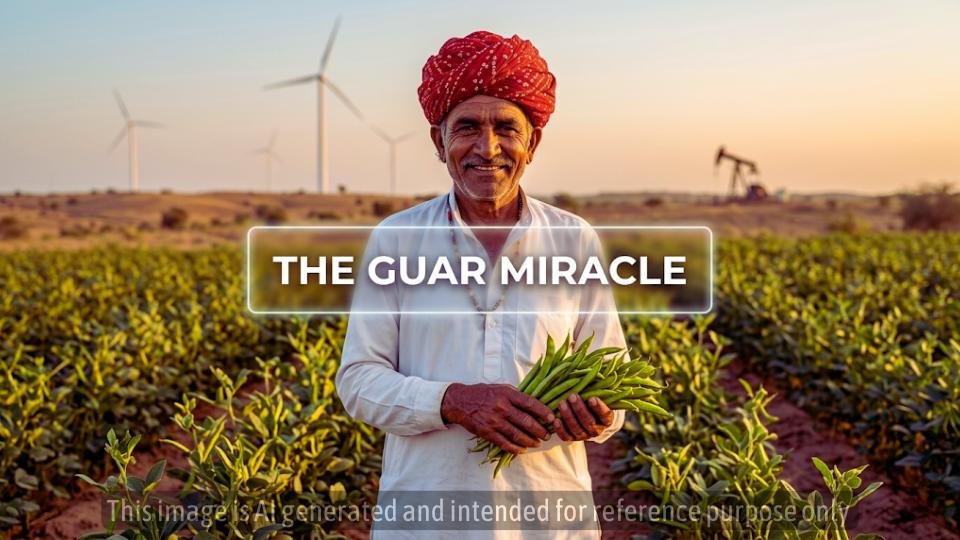
Picture a peaceful evening in a rural Indian village where a family quietly enjoys a simple dinner of “guar ki fali” or cluster bean vegetable curry. Now, imagine that thousands of miles away, in countries like the United States, engineers running massive, high-tech petroleum drilling stations are anxiously waiting for deliveries of a refined powder made from those exact same humble beans. It almost sounds like a quirky storyline from a mild comedy movie, yet it perfectly mirrors a surprising global reality. A small, sturdy green pod that often flies under the radar in daily agricultural conversations actually powers major international industries. Recently, a popular rumor began floating around social media: “If this Indian plant goes extinct, producing petroleum will permanently stop!” Today, we are diving deep into this fascinating topic to gracefully unearth the logical and interesting truth behind guar gum.
First and foremost, it is important to respectfully debunk the big myth while maintaining complete respect for the incredible properties of the guar bean. The notion that guar is the actual “source” of petroleum or that the world’s gasoline supply will disappear completely overnight if the plant vanishes is not scientifically accurate. The raw oil stored deep under the surface of the Earth does not magically originate from cluster beans. So what is the exact truth? While the plant is not the creator of oil, it is truly one of the industry’s greatest mechanical helpers. Oil drilling techniques, specifically a modern process known as “hydraulic fracturing” or fracking, heavily rely on an extraordinary natural product processed from these plants known as guar gum. If this majestic Indian crop were suddenly lost, we would not lose all the world’s oil tomorrow, but finding and extracting it would certainly become a far more difficult, environmentally harsh, and highly expensive struggle for giant energy corporations globally.
To truly understand how this natural thickener beautifully assists the petroleum industry, we need to take a quick peek beneath the surface. Fracking is an industrial method used to pull valuable natural gas and crude oil out of solid rocks buried far below our feet. The engineers do this by forcefully injecting massive quantities of liquid and sand down into the earth until tiny rock fractures begin to split open. There is one enormous physical problem here, however. Ordinary water is simply too thin to effectively carry and push heavy pieces of sand miles deep down the pipes to keep those rocky cracks open. This is precisely where our amazing little bean steps up to the global stage. When seeds from the cluster bean are finely ground into guar gum powder and mixed with water, the water instantly becomes an impressively thick, natural, honey-like fluid. This thick gel suspends the heavy grains of sand perfectly, stopping them from sinking to the bottom. Without this flawless natural viscosity-enhancing agent doing its quiet duty beneath the soil, pulling fuel up to the surface safely becomes tremendously frustrating.
The most magnificent part of this story finds its roots securely nestled in the rural, drought-prone fields of western India. To date, India joyously shoulders almost all of the world’s global supply chain of this commodity, bravely providing nearly 90% of the entire planet’s exported guar. If you ever walk through the sun-baked districts of Barmer, Bikaner, or Jaisalmer in majestic Rajasthan, you will notice these strong crops growing vibrantly in dry sands that simply cannot easily sustain water-heavy grains. Every single year, India ships hundreds of thousands of tonnes of processed guar gum powder to eager, fast-moving industrial heavyweights like the United States, various European nations, and diverse economies stretching from the Middle East to Russia. Small-scale rural farmers are, completely without question, single-handedly holding up multi-million-dollar supply bridges right from their hot desert fields.
Putting aside our focus on oil and gas, what makes guar beans so delightfully brilliant is their endless range of friendly, everyday human applications. We constantly use this natural thickener throughout daily home life in ways that quietly charm us. For instance, do you love beautifully smooth ice cream on a warm sunny afternoon? Guar gum thoughtfully stabilizes the freezing properties so the mixture avoids forming clumpy ice crystals on your dessert. It also gently holds soft tablet medicines together so your body effortlessly processes vitamins, and beautifully supports fabric creations across giant paper and textile mills. The natural, eco-friendly superiority of cluster bean products makes synthetic lab creations seem quite inferior. While artificial alternatives do try to copy the unique texture provided by cluster beans, big-budget industries regularly choose natural guar because it effectively answers cost-control needs while keeping industrial operations reasonably cleaner.
Ultimately, investigating this dynamic agricultural supply story easily removes the mental gap between high-technology boardrooms far overseas and traditional farming fields right back home. This reality confirms an uplifting worldview: nature is deeply connected, tying together modern engineering and traditional earth cultivation in harmony.
Social Message:
As we observe the wonders of high technology running smoothly across our modern world, we must always pause to warmly honor the hardworking farming hands that start it all under an open sky. No grand machine hums and no modern industry stands perfectly strong without the humble foundation laid gently down by traditional agriculture. Caring for our dedicated farmers, honoring their deep generational crop knowledge, and preserving our natural native plants reminds us that agriculture is the silent backbone supporting our advanced human family.
Standard Disclaimer: The above-detailed informational content is purely formulated for extensive educational storytelling, engaging entertainment, and objective journalistic factual understanding regarding general agricultural commodities. This article does not provide professional fiscal advice, targeted regulatory investment directives, binding academic claims, or corporate supply promises.








Leave a Reply