
कृपया इसे हिंदी में पढ़ने के लिए यहाँ क्लिक करें
The Backstory of a Bold Energy Shift
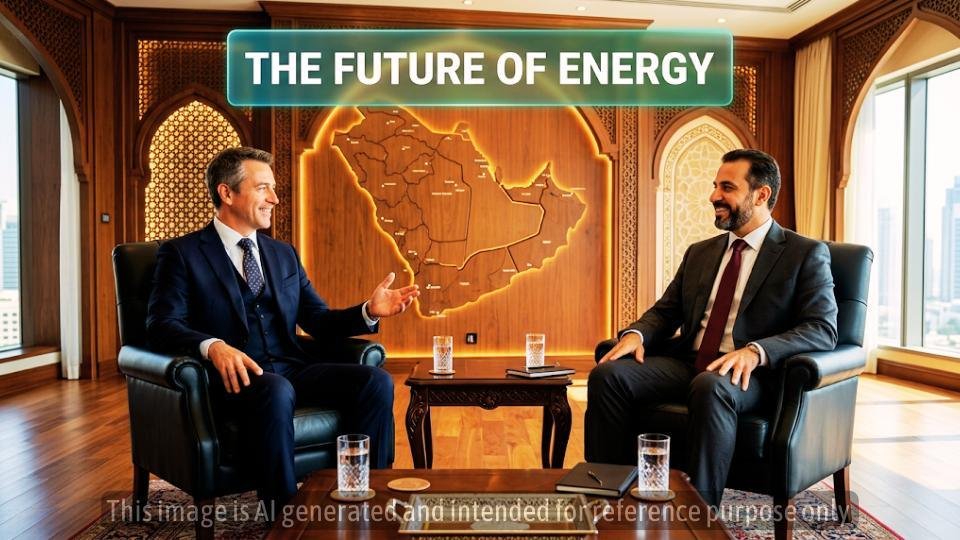
It is a bit funny when you think about it. Saudi Arabia is famously known as the titan of oil. They are the world’s primary engine for petroleum. So why on earth would they want to build nuclear reactors? It seems like a baker trying to learn how to cook pasta. But the reason is quite clever. They are looking at the long game. They want to save their oil for export because that is where the real money is. Burning it at home for electricity generation or water desalination just does not make financial sense anymore. This move is a cornerstone of Vision 2030, a massive plan by Crown Prince Mohammed bin Salman to diversify their economy and prepare for a future that exists beyond the oil age.
A Historic Diplomatic Move
The recent United States and Saudi Arabia Civil Nuclear Agreement is a massive deal. It is not just about making power. It is one of the most significant pieces of nuclear diplomacy in this decade. For years, Saudi Arabia asked for this. They wanted the technology and the infrastructure to build reactors. For a long time, the United States said no. The United States was worried about uranium enrichment and whether it could lead to the development of a nuclear bomb. But the world has changed. With China becoming a huge player in the Middle East and Russia exporting nuclear technology through its company Rosatom, the United States realized that if they did not step in, someone else would. The Trump administration concluded that it is better for Saudi Arabia to work under American influence than to look toward Beijing or Moscow.
The Famous 123 Agreement
You might hear people talking about a 123 Agreement. This is basically a legal requirement under United States law. It acts as a framework. Without this, American companies cannot legally sell nuclear reactors or provide engineering services to other nations. It ensures that the technology is used for peaceful purposes. Think of it as a quality assurance seal for global nuclear commerce. We have seen these agreements with other nations, but this one with Saudi Arabia is different. It is highly controversial because of the specific terms surrounding uranium enrichment.
The Gold Standard and the Enrichment Dilemma
There is this concept called the Gold Standard in the nuclear world. The United Arab Emirates signed a deal with the United States that basically said they would never enrich uranium domestically. They would just buy the fuel. That is the ideal scenario for the United States. But Saudi Arabia pushed back. They argued that as a sovereign nation, they have the right to develop their own fuel. This is the dual use technology problem. The same technology that makes fuel for a power plant can, if pushed further, create material for weapons. This is why security experts are worried. It creates a security dilemma. If one country gets this technology, the neighbors get nervous. We see this with Iran, Turkey, Egypt, and Israel. Everyone is watching everyone else.
The India Angle
For India, this is a big deal. We get about 60 percent of our crude oil imports from West Asia. If this region becomes unstable because of a nuclear arms race or intense strategic competition, it will hit our pockets. Energy prices could soar. India has strong relationships with all these players, so it has to walk a very tightrope. We want to see energy security, but we also need stability in the region to keep the global economy afloat.
A Path Toward a Sustainable Future
At the end of the day, we have to hope that this technology is used for the right reasons. The world is changing. We need cleaner energy and smart solutions to manage our resources. If this agreement can lead to a more stable Saudi economy that is not solely dependent on oil, it could be a net positive. True strength comes from working together and building trust. Let us hope that nations can move past the shadows of the past and use the power of the atom to light up homes and cities rather than casting them into darkness.
LEGAL DISCLAIMER: This article is for informational and educational purposes only. It does not constitute legal, financial, or political advice. The information is based on public records and general geopolitical analysis. Please consult official government sources and reputable news outlets for the most accurate and up to date reporting on international agreements.






Leave a Reply