
कृपया इसे हिंदी में पढ़ने के लिए यहाँ क्लिक करें
The Hidden Price Of Free: A Look At The Global War Over Digital Payments
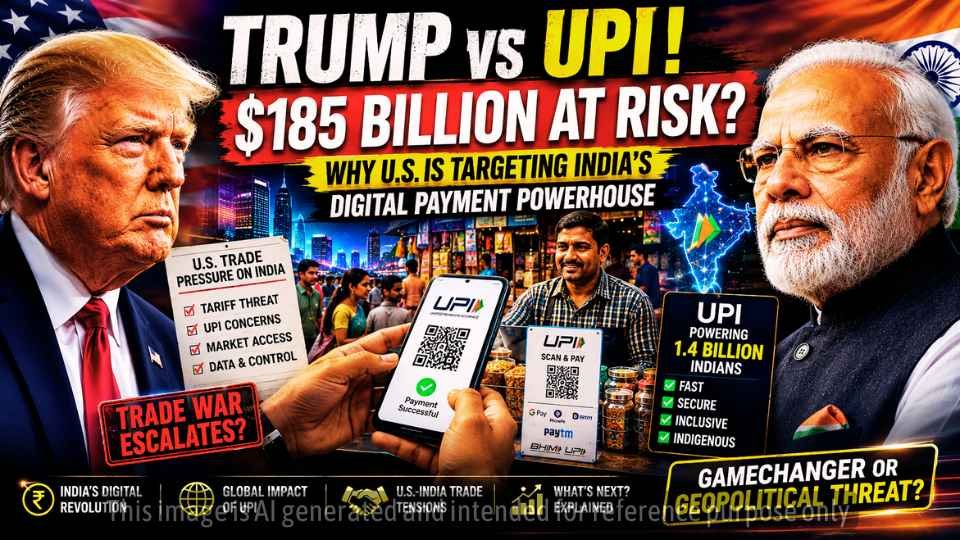
You probably scan a QR code at your local shop or pay your friend for tea with a simple tap on your phone. It feels seamless. It feels free. We have grown accustomed to the magic of UPI and RuPay transactions in India. But have you ever stopped to wonder if this convenience comes with a hidden cost. Behind the scenes a massive Geopolitical War is brewing. It is a battle between two very different visions of the future. On one side you have the Sovereign Digital Payment Systems like India’s UPI that prioritize Financial Inclusion and zero cost transactions. On the other side you have the established Global Payment Networks like Visa and Mastercard that rely on a Toll Gate Model of processing fees.
The issue is that India’s model is winning. It is winning so decisively that it is rattling the boardrooms of powerful corporations in Washington. This is not just about money. It is about who controls the flow of information and wealth in the Digital Economy.
The Toll Gate Model Versus The Zero Fee Ecosystem
To understand why global giants are so frustrated we need to look at how they make money. In the US Payment Model every transaction is like a car passing through a toll gate. When you pay with a card a piece of that money is sliced off as a Merchant Discount Rate or MDR. This fee is then distributed among four powerful gatekeepers. The Issuing Bank that gave you the card takes a cut. The Processing Gateways that facilitate the digital handshake take their share. The Global Payment Networks that own the rails like Visa and Mastercard take a fee. Even the government collects a tax.
India flipped this entire script. Since 2020 the government mandated an absolute Zero MDR for UPI and RuPay. This meant merchants received the full amount of every payment. It was a massive win for Financial Inclusion in India. It effectively created a closed loop ecosystem that allows local businesses to thrive without paying these hefty toll fees. However this success story has a side effect. It leaves Fee Reliant Foreign Competitors in the dust because they simply cannot compete with a state backed system that costs the end user nothing.
The Headline That Shook India: Why The US Government Is Concerned
The tension spilled over into the public eye in March 2026. The United States Trade Representative or USTR officially classified India’s Digital Payment Policies as a Foreign Trade Barrier. They argued that policies favoring domestic players prevent US electronic payment services from competing on a Level Playing Field. In their view the success of our local systems is not just innovation. It is an unfair advantage.
This is where the political drama intensifies. The Trump Factor has become a central point of discussion. Reports suggest that American companies are lobbying hard to force India to open up its market. They claim that our protection of domestic systems is essentially a hostile act against their corporate interests. In August 2026 the Lok Sabha took a significant step by passing the Taxation And Other Laws Amendment Bill. This legislation essentially alters the Payment And Settlement Systems Act of 2007. It removes the legal guarantee of Zero MDR that kept UPI free. It paves the way for new Transaction Charges.
Is This The End Of Free UPI?
You might be panicking thinking that your daily payments will now cost you money. Take a deep breath. The government has clarified that UPI Will Remain Free For Citizens. There will be no charges for your everyday person to person transactions. The change is aimed at Large Merchants who process massive volumes of payments every year.
The goal here is to sustain the Infrastructure Costs that the government has been subsidizing for years. Processing billions of transactions is not free. It requires Cybersecurity, Bank Server Maintenance, and Advanced Technology to prevent fraud. For the last few years the government has poured thousands of crores into this pool. But as the system scales to record breaking levels of 314 Lakh Crore in annual value the government is shifting the burden. Future MDR Charges will be minimal and targeted at high turnover businesses.
The Global Hit List: Sovereignty Versus Hegemony
India is not the only target in this fight. This is a global trend. Look at Brazil and their Pix system. When they tried to make a sovereign low cost payment network the US government invoked Section 301 Tariffs to punish them with a twenty five percent tax. Look at Indonesia where there was fierce objection to their National Payment Gateway. Look at Turkey and their Troy network.
The US Administration has consistently shown a willingness to weaponize Trade Deals to protect its corporate giants. They demand access. If a country refuses to let them take a cut of every single transaction they label it as an unfair trade practice. This is the struggle for Strategic Autonomy. India is now standing at a critical crossroads where it must balance its own Domestic Sustainability against the immense pressure of Foreign Coercion.
A Final Word On Our Digital Future
Our digital payment revolution is not just about convenience. It is about dignity and independence. While the geopolitical pressure is real and the threat of new fees for large businesses is looming we must remember what we have built together. A system that serves everyone from the street vendor to the tech entrepreneur. We must ensure that while we navigate these global trade pressures we never sacrifice the Financial Well Being of the common citizen. Stay informed, stay vigilant, and continue to support the systems that prioritize our collective progress.
Legal Disclaimer: This article is for informational and educational purposes only. It does not constitute legal, financial, or political advice. The information provided is based on analysis of current events and publicly available reporting. Please consult professional experts for any decisions related to business or investments.







Leave a Reply