
कृपया इसे हिंदी में पढ़ने के लिए यहाँ क्लिक करें
A New Dawn for Food Security: How Digital Rupee is Changing the Ration Game
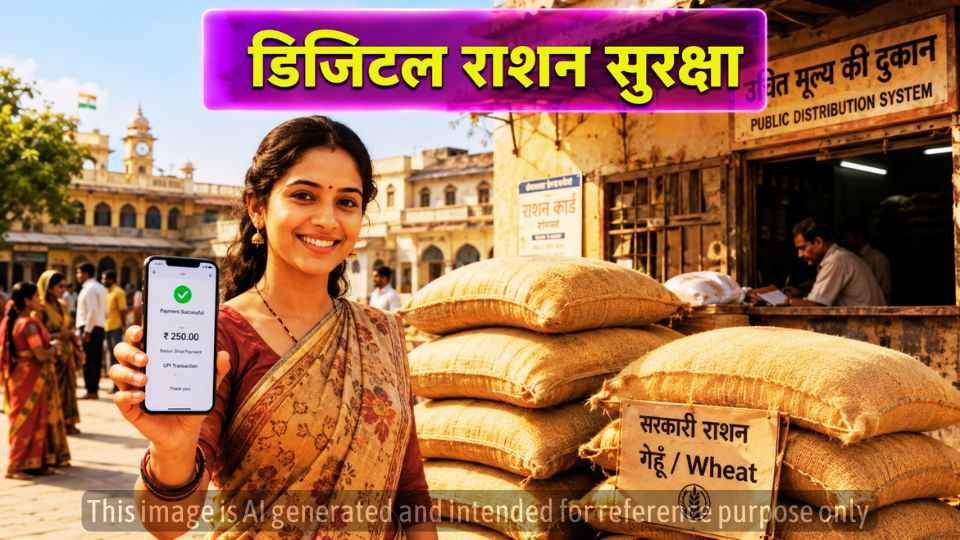
There was a time when getting your monthly ration meant waking up at dawn and standing in endless, winding lines. You would clutch your card tightly and hope the supplies did not run out before you reached the front of the queue. It was a chaotic, often frustrating, yet essential part of life for millions of families across India. Fast forward to today, and the scene is shifting rapidly. The government is testing a new way to distribute food security, moving away from physical grain distribution toward a more seamless, tech-driven approach involving the Digital Rupee or CBDC.
The Basics: What is the Digital Rupee?
At its core, the Digital Rupee is a Central Bank Digital Currency or CBDC. Think of it not as a standard online bank transfer or a UPI payment, but as a digital version of hard cash issued directly by the Reserve Bank of India. The real magic here lies in its programmability. The government can embed rules into this money. This means the money you receive for rations can only be spent at authorized ration shops to buy specific food grains. You cannot use it to pay your electricity bill or buy a mobile recharge. It is a purpose bound currency, designed specifically to ensure that the funds meant for food security actually end up on your dinner table.
The Logic: Why the Change?
You might wonder why we need to change a system that people are already used to. The answer is simple: Leakage and Corruption. In the old system, intermediaries often siphoned off grains, or ineligible people claimed benefits intended for the poor. By digitizing the process, the government creates a real time data trail. Every transaction is recorded, leaving little room for phantom beneficiaries or dishonest middlemen to steal resources. The pilot project in Chandigarh is essentially a stress test for this technology, proving that food security can be made more robust, efficient, and transparent through digital innovation.
The Challenge: The Digital Divide
While the technology is impressive, we cannot ignore the human element. For many, especially the elderly or those living in remote rural areas, technology can be intimidating. Owning a smartphone, understanding QR codes, and navigating a digital wallet is not a universal skill yet. There is a very real digital divide that the authorities must bridge. If the system goes entirely digital without proper support and education, it risks leaving behind the very people it is meant to protect. It is crucial that this transition remains inclusive rather than exclusive.
The Future: Beyond Just Ration
If this digital experiment succeeds, the implications are massive. This model of programmable money could be applied to fertilizer subsidies, LPG subsidies, and scholarships. Imagine a world where a student receives a scholarship that is automatically programmed to pay only for tuition or books. The potential for eliminating corruption is enormous. It signals a move toward a welfare state that is not just generous but also smart and unshakeable in its integrity.
A Social Message: Staying Human in a Digital World
While we embrace this new technological era, we must remember that behind every ration card is a person with a story. Behind every digital wallet is a family trying to make ends meet. As we move toward this digital revolution, our priority should remain the dignity and comfort of the common citizen. Let us ensure that while we upgrade our systems, we keep our empathy intact, making sure that progress truly benefits everyone, leaving no one behind.
Legal Disclaimer: This article is for informational purposes only. It is based on available public reports and general knowledge regarding the government’s pilot projects. Policies, regulations, and implementation strategies regarding the Digital Rupee and the Public Distribution System (PDS) are subject to change by the government of India. Always refer to official government notifications and websites for the most accurate and up-to-date information regarding welfare schemes and entitlements.








Leave a Reply