
कृपया इसे हिंदी में पढ़ने के लिए यहाँ क्लिक करें
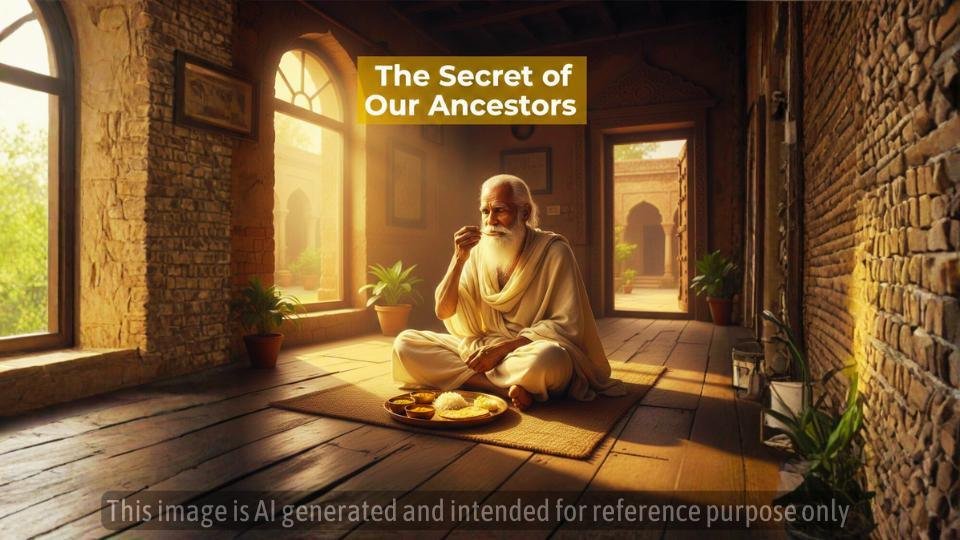
In our world of high-rise dining tables and ergonomic chairs, the simple act of sitting on the floor to eat might seem like a thing of the past. We often see it as a sign of old times or a lack of modern furniture. But what if we told you that our ancestors weren’t poor or backward? What if they held a profound secret to a healthier life, a secret that lay right there on the ground?
Today, we peel back the layers of time to reveal the stunning science and deep wisdom behind this age-old practice. It’s a journey back to our roots, promising better digestion, a stronger body, and a calmer mind.
A Quick Backstory: It Was Never About Poverty
Let’s be clear: our ancestors were not sitting on the floor because they couldn’t afford a chair. They were intelligent observers of the human body. They understood that the way we sit to eat has a direct impact on our health. That cross-legged posture you see in old pictures is not just a sitting position; it’s a powerful yoga pose known as Sukhasana, or the “Easy Pose.”
The Magic of Sukhasana: A Yoga Pose on Your Dinner Mat
Sitting in Sukhasana is a mindful act that prepares the body for the meal to come. Here’s what happens when you adopt this simple posture:
- Natural Stomach Exercise: When you sit on the floor, you naturally bend forward slightly to take a bite of food and then return to an upright position to swallow. This gentle, repetitive motion acts as a mini-workout for your abdominal muscles.
- Igniting the Digestive Fire (Jatharagni): This back-and-forth movement stimulates the stomach and encourages the secretion of digestive enzymes. In ancient Indian wellness practices, this is referred to as igniting the “Jatharagni” or digestive fire. A strong digestive fire means your food is broken down properly, and your body can absorb all the essential nutrients efficiently.
The Blood Flow Advantage: A Tale of Two Postures
This is where science gets really interesting. Think about how you sit on a chair. Your legs are hanging down, below the level of your heart.
- On a Chair: Blood naturally flows down into your legs, and your heart has to work a bit harder to pump it back up and also to the digestive organs that need it most after a meal.
- On the Floor (Sukhasana): When you sit cross-legged, the blood flow to your legs is naturally reduced. This allows your heart to easily direct a rich supply of blood to your stomach and intestines. This improved circulation is crucial for effective digestion and nutrient absorption.
Beyond Digestion: The Ripple Effect of Benefits
The advantages don’t stop at the stomach. This simple habit creates a cascade of positive effects throughout your body.
- Improves Posture and Flexibility: Sitting on the floor requires you to keep your spine straight, which naturally corrects your posture and can reduce back and neck pain. It also keeps the joints in your hips, knees, and ankles flexible and healthy.
- Encourages Mindful Eating: You can’t slouch on the floor as easily as on a couch. This posture brings a sense of focus to your meal. It encourages you to eat slower, chew your food properly, and pay attention to your body’s signals of fullness, which can help prevent overeating and aid in weight management.
- A Calmer Mind: Sukhasana is a meditative pose. Adopting it during meals helps calm the mind and reduce stress. A relaxed mind leads to a relaxed stomach, further improving digestion.
A Social Message: Reconnecting with Wisdom
In our rush to embrace modernity, we sometimes leave behind timeless wisdom that costs nothing and offers everything. Eating on the floor is not about going back in time; it’s about bringing forward the intelligent practices that are deeply aligned with our body’s natural design.
It’s a call to look at our traditions not just as rituals, but as a science of life perfected over thousands of years. By making this small change, even for just one meal a day, we can unlock better health and pay respect to the genius of our ancestors. Let’s bring back this simple, powerful habit for a healthier and more connected life.








Leave a Reply