
कृपया इसे हिंदी में पढ़ने के लिए यहाँ क्लिक करें
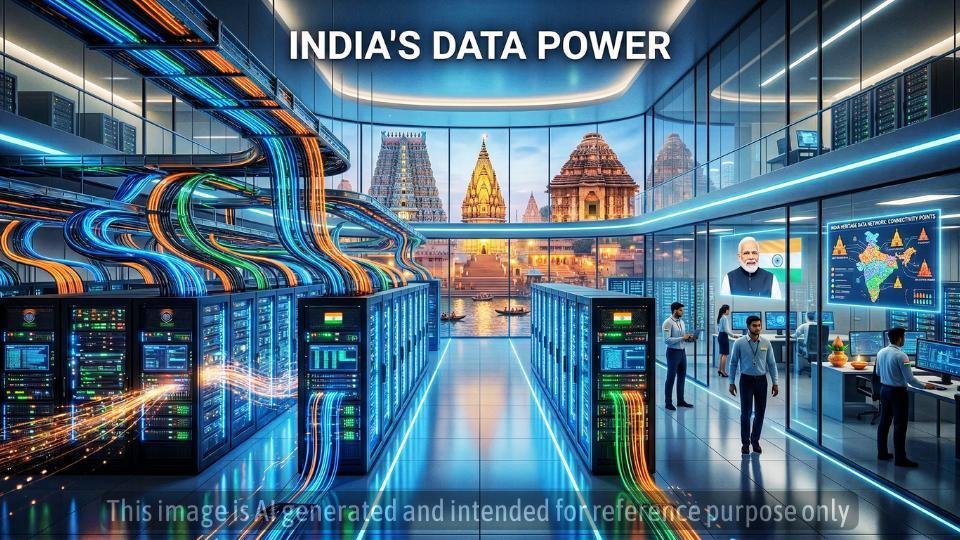
In a world increasingly dominated by data, India is positioning itself as a global powerhouse, not just in data generation but in its storage and processing. The nation is witnessing an unprecedented boom in the construction of data centers, the silent engines of the digital economy. This surge is not merely a fleeting trend but a foundational shift, driven by a confluence of factors including a proactive government, burgeoning data consumption, and the transformative power of Artificial Intelligence (AI).
The Great Indian Data Rush
India, which generates 20% of the world’s data, has historically stored only a fraction of it. This discrepancy is rapidly changing. The country’s data center capacity has quadrupled in the last five years and is projected to double from 0.9 GW in 2023 to around 2 GW by 2026. This expansion is fueled by an estimated capital expenditure of Rs 50,000 crore over the next three years. Projections suggest that by 2030, India’s data center capacity could grow fivefold, generating over $30 billion in capital expenditures.
The primary catalyst for this explosive growth is the Indian government’s emphasis on data sovereignty. The Digital Personal Data Protection (DPDP) Act of 2023 has mandated that the data of Indian citizens be stored within the country, compelling companies to establish or expand their data centers in India. This move has been a game-changer, transforming data localization from a buzzword into a powerful market driver.
The Backstory: From Server Rooms to Strategic Priority
Just a decade ago, India’s data center landscape was characterized by small, enterprise-owned server rooms. However, with the rise of cloud computing, e-commerce, and a burgeoning internet user base, the demand for robust data infrastructure has skyrocketed. The COVID-19 pandemic further accelerated this trend, as remote work, online education, and digital entertainment became the new normal.
Today, data centers are a top strategic priority for the nation, forming the backbone of its trillion-dollar digital economy. This is not just about providing the infrastructure for streaming movies or online shopping; it’s about national security, powering a burgeoning startup ecosystem, and enabling cutting-edge research in fields like AI and big data analytics.
The Big Players and Their Grand Plans
The data center boom has attracted massive investments from global tech giants. Amazon Web Services (AWS), Google, and Microsoft are all pouring billions of dollars into building hyperscale data centers across the country. Reliance Industries has also announced significant investments in the sector.
- Amazon Web Services (AWS) has committed Rs 70,000 crore in Maharashtra.
- Google has announced an investment of approximately Rs 50,000 crore in Vizag.
- Microsoft is expanding its operations in Hyderabad.
- The Adani Group is collaborating with global tech companies for a 5-GW renewable-powered hyperscale data center platform.
The primary hubs for data centers in India are currently Mumbai and Chennai, which together account for over 70% of the country’s capacity. However, to deliver low-latency content for services like 4K streaming and online gaming, smaller, modular data centers are also being built in Tier-2 and Tier-3 cities.
Challenges and the Road Ahead
This rapid expansion is not without its challenges. Data centers are incredibly power-hungry and consume vast amounts of water for cooling. It is estimated that a single large data center can consume as much electricity as a small city. This has raised concerns about the environmental impact and the strain on natural resources. In response, there is a growing emphasis on using renewable energy to power data centers and on developing innovative, water-efficient cooling technologies.
Another challenge is the high cost of setting up data centers, with the average cost per MW having increased significantly in recent years.
A Social Message: Bridging the Digital Divide
The data center boom is not just about big tech and corporate giants. It has the potential to create a more inclusive digital future for all Indians. The expansion of data infrastructure into smaller towns and cities can help bridge the digital divide, providing millions of people with access to better education, healthcare, and economic opportunities. This digital revolution can empower small businesses, farmers, and artisans, enabling them to connect with a global market. It is crucial, however, that this growth is managed sustainably, with a focus on environmental responsibility and equitable access to the benefits of the digital age.







Leave a Reply