
कृपया इसे हिंदी में पढ़ने के लिए यहाँ क्लिक करें
The Return Of Polymer Banknotes In India: A New Era For Currency
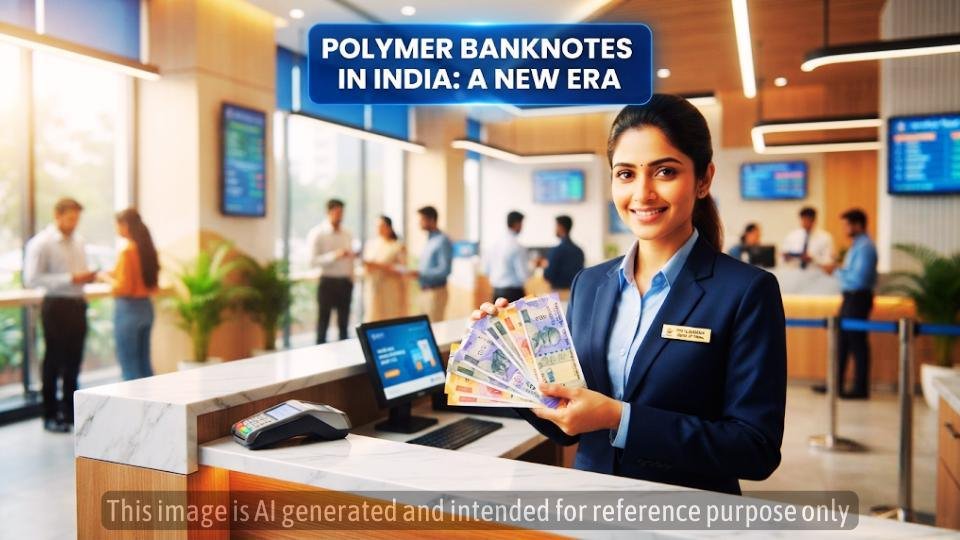
The Reserve Bank of India is once again exploring a major shift in how we handle our hard earned cash. If you remember the year 2013, you might recall the brief appearance of the 10 rupee plastic notes that were rolled out as a pilot project. That experiment was eventually put on the shelf due to technical and logistical challenges. The machines could not handle the texture, distribution was a nightmare, and the notes did not behave like the traditional paper currency we all know. But now, over a decade later, the conversation is back on the table. The Reserve Bank of India is seriously considering reintroducing polymer banknotes into circulation.
The Economic Reality: Why Are Paper Notes Failing?
It is not just about trying something new for the sake of it. The costs are piling up. India spends thousands of crores every single year just on printing currency. In the financial year 2024, the cost hit 5,101.4 crore rupees. That number is projected to climb even higher in the next year. To make matters worse, the volume of damaged or soiled notes is skyrocketing. In 2024 alone, over 21 billion notes were disposed of because they were torn, dirty, or worn out. This is a 12.3 percent increase from previous years. When money becomes this difficult to maintain, it is time for a change.
What Are Polymer Banknotes And How Do They Differ?
These notes are not made of the same cotton based paper we have used for generations. They are made from a specialized plastic known as Biaxially Oriented Polypropylene or BOPP. Think of it as a durable substrate that is designed to survive the harshest conditions. Unlike our current paper notes that absorb dirt and moisture, polymer notes are water resistant. They do not tear easily, they stay cleaner for much longer, and they last two to four times longer than traditional notes. They are simply tougher.
The Challenges Of Going Plastic
While the idea sounds perfect, the reality is a bit more complex. Transitioning to polymer currency is not as simple as flipping a switch. Every ATM and currency counter in the country is currently calibrated to handle the specific weight and texture of cotton based paper. If we switch to plastic, those machines would need expensive infrastructure modifications. Additionally, these notes are more slippery than paper, which can lead to handling difficulties. We also have to consider the heat sensitivity of plastic. India is a hot country, and plastic does not always play nice with extreme temperatures if stored improperly.
Combating Counterfeit Currency
One of the biggest arguments for this shift is security. Counterfeit notes pose a massive threat to our national security and economic stability. Polymer banknotes offer a massive upgrade in this department. They allow for the integration of transparent windows, holograms, and optical security devices that are incredibly difficult and expensive to replicate. This makes them a much harder target for criminals and helps maintain the trust of the common citizen in our currency.
Social Message: Money Is More Than Just Material
At the end of the day, a banknote is more than just a piece of paper or a strip of plastic. It represents the labor, the dreams, and the dignity of every person in India. Whether it is a farmer in a remote village or a shopkeeper in a bustling city, our currency is the thread that connects our livelihoods. Whatever decision the Reserve Bank of India makes regarding polymer currency, the goal should always be to make life easier and more secure for the people who form the backbone of our economy. Financial systems should serve the people, not the other way around.
Standard Legal Disclaimer: This article is provided for informational purposes only and does not constitute financial or legal advice. The information presented regarding the Reserve Bank of India and potential currency changes is based on general industry reports and public discussions. Please consult official government sources for the most accurate and up to date information. The author and publisher assume no responsibility for any actions taken based on the content of this article.








Leave a Reply