
कृपया इसे हिंदी में पढ़ने के लिए यहाँ क्लिक करें
In a world buzzing with terms like ‘gut health’, ‘probiotics’, and ‘fermented foods’, where expensive supplements fly off the shelves, an age-old secret has been quietly sitting in our own kitchens. It’s the humble Indian pickle, or Achar, often dismissed by modern health gurus as too oily or salty. Today, we peel back the layers of this flavourful tradition to reveal the stunning science that makes it one of the most powerful, natural health boosters known to humanity.
A Short Backstory: The Days Before Refrigerators
Imagine a time without refrigerators. How did our ancestors preserve the seasonal bounty of fruits like mangoes and lemons for the entire year? They didn’t have technology; they had something far more powerful—a deep understanding of nature’s chemistry. This wisdom, passed down through generations, particularly from our grandmothers, wasn’t just about preventing food from spoiling; it was about enhancing its nutritional value.
Unlocking the Science: It’s Not Magic, It’s Chemistry!
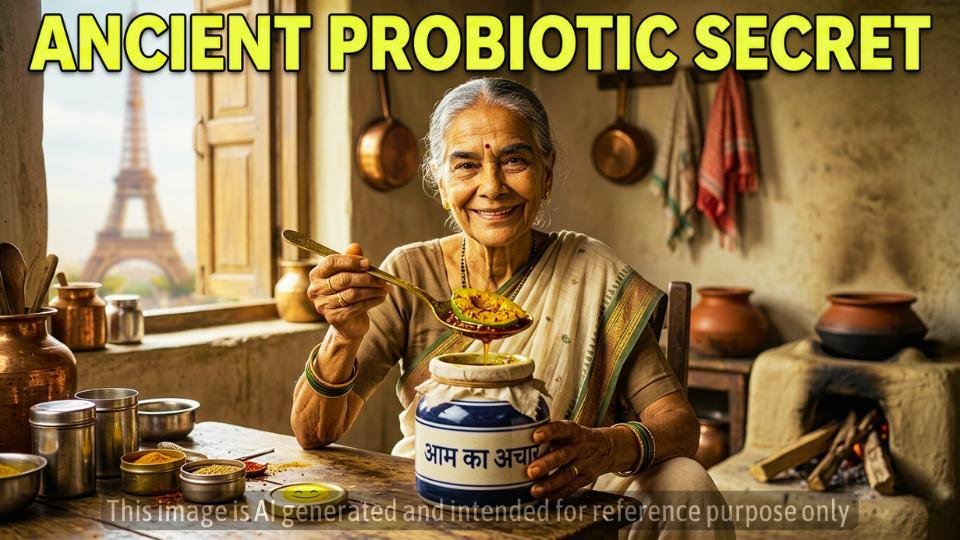
As our wise grandmother from the village reminds us, making pickles is a masterclass in science. Let’s break down her time-tested method.
- The Power of Salt & Osmosis:
The first step is to generously coat the chopped mangoes or lemons in salt. This isn’t just for taste. The salt performs a scientific process called Osmosis. It pulls all the water out of the fruit pieces. Why is this important? Harmful bacteria, the kind that causes spoilage and sickness, need water to survive. By removing the water, our grandmothers created an environment where bad bacteria simply couldn’t grow. - The Golden Shield of Mustard Oil:
Next, the salted pieces are submerged in mustard oil. This oil acts as a protective shield. It forms a layer on top, cutting off the oxygen supply from the air. Without oxygen, other spoilage-causing microbes cannot thrive. This simple step ensures the pickle stays safe to eat for months, even years. - The Secret Magic: Welcome the Good Bacteria!
Now for the most amazing part. Once the jar is sealed, a magical transformation begins. In this oxygen-free, low-water environment, a special kind of “good bacteria” called Lactobacillus starts to grow. These are the same powerful microorganisms found in yogurt and expensive probiotic drinks. This process is called fermentation. These friendly bacteria not only give the pickle its signature tangy and sour taste but also turn it into a powerhouse of gut-friendly probiotics.
From Ancient Wisdom to Modern Gut Health
Today, many of us spend a fortune on pills and supplements for “gut health.” Our grandmothers, however, had it all figured out. Every slice of their homemade pickle delivers millions of these beneficial bacteria to your stomach. These tiny helpers do wonders:
- They help digest your food better.
- They improve the absorption of nutrients from other foods you eat.
- They build a strong gut lining, which is crucial for a powerful immune system.
So, that piece of achar your grandmother serves you isn’t just a flavour enhancer; it’s a carefully crafted, natural medicine for your stomach.
A Social Message to Remember
In our race towards modernity, let us not forget the profound wisdom held by our elders. Their knowledge, born from centuries of experience, is not superstition but deep-rooted science. The story of the Indian pickle is a powerful reminder to cherish our traditions, listen to our grandparents, and understand that sometimes the most effective health solutions are not in a lab but in a loving home kitchen. It’s a legacy of health that we must preserve and pass on.








Leave a Reply