
कृपया इसे हिंदी में पढ़ने के लिए यहाँ क्लिक करें
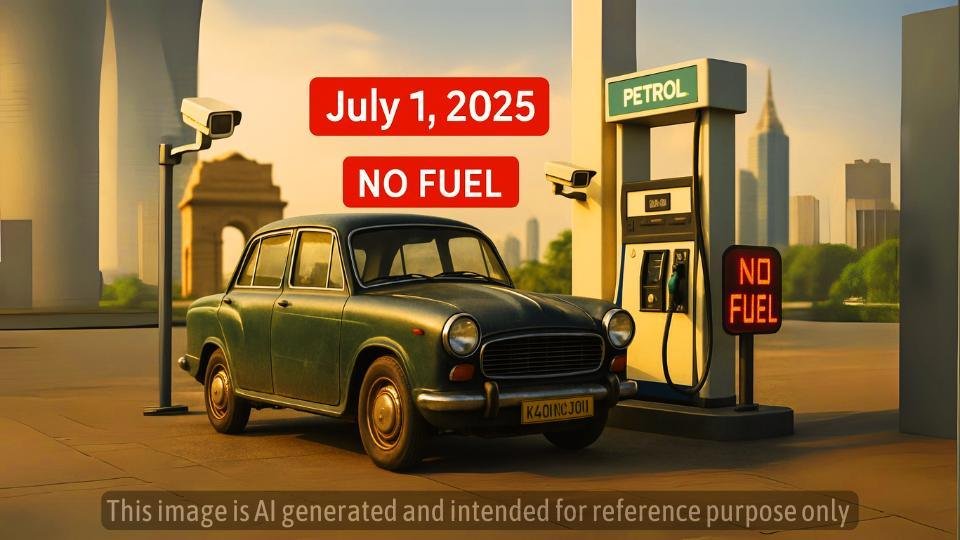
From July 1, 2025, petrol pumps across Delhi will refuse refueling to end‑of‑life petrol and diesel vehicles—defined as diesel vehicles over 10 years old and petrol vehicles over 15 years old, regardless of their registration state.
This directive comes from the Commission for Air Quality Management (CAQM) and is backed by the Delhi government, as part of efforts to combat persistent air pollution.
CNG vehicles—even those older than 15 years—are exempt from the fuel ban, and CNG pumps will continue normal operations.
Why this change now?
Delhi’s toxic air quality—accentuated by vehicular emissions—is a long-standing public health concern . CAQM data suggests older vehicles contribute significantly to PM₂.₅, NOₓ, and SO₂ levels.
Vehicle age thresholds:
- Diesel vehicles older than 10 years
- Petrol vehicles older than 15 years
These age cut‑offs mirror Supreme Court (2018) and National Green Tribunal (2015) mandates, but the new twist is the fuel denial, not just road usage restrictions.
Who’s enforcing this?
Fuel pumps must now:
- Install ANPR cameras to scan and verify vehicle ages via the VAHAN database in real time.
- Display visible signage: “Fuel will not be dispensed to End of Life Vehicles—15 years petrol/CNG, 10 years diesel w.e.f. 01.07.2025”.
- Train staff to deny service to flagged vehicles and log each denial manually or digitally on a daily or weekly basis.
Enforcement teams (fuel station staff, Transport Dept, Traffic Police, MCD) numbering around 200 are set to cover about 90% of Delhi’s ~400 petrol/diesel pumps, with legal authority to fine and impound non‑compliant vehicles.
Penalties follow Section 192 of the Motor Vehicles Act, 1988, and impounded vehicles may be scrapped under Registered Vehicle Scrapping Facility (RVSF) rules.
What happens at the pump?
- ANPR detects an end‑of‑life vehicle and alerts station staff.
- Fuel is denied, and the incident is logged.
- Enforcement teams may impound the vehicle on‑site.
- Vehicles may be scrapped or cleared after payment of fine; repeat offenses likely lead to scrapping.
Extra police/security presence will be deployed to maintain order at fuel stations.
Public response & concerns
Some pump‑owners worry about customer confrontations and have requested police/civil‑defence support.
A LocalCircles survey found that almost 44% of vehicle owners oppose the ban, believing their older vehicles are still roadworthy, while 7% remained undecided.
Critics argue that age is not always the best proxy for fitness, suggesting emission/fuel‑efficiency tests as alternatives .
Backstory & timeline:
- 2015: NGT bans diesel > 10 yrs, petrol > 15 yrs.
- 2018: Supreme Court reinforces old‑vehicle restrictions.
- 2025: CAQM issues new “no‑fuel” directive; SOPs rolled out on June 17.
What’s next?
- From Nov 1, 2025, the ban will extend to Delhi NCR districts: Gurugram, Faridabad, Ghaziabad, Noida, Sonipat.
- From April 1, 2026, it will cover the rest of the NCR.
What vehicle owners should do:
- Scrap old vehicles via authorised centres and avail government incentives.
- Switch to cleaner options: EVs, new petrol/diesel or CNG vehicles. Delhi’s EV policy offers tax waivers and incentives.
- If wishing to drive old vehicles out-of-city, obtain a NOC from authorities .
Anecdotal reactions:
- Some Delhiites are already rushing to sell or scrap old vehicles—calling the move “panic‑inducing”, though officials insist it’s just and necessary .
- A Reddit user joked: “This is just going to create an underground fuel market.”
- Another warned: “Imagine people from UP/HR … coming with their 15 year old vehicles.”









Leave a Reply