
कृपया इसे हिंदी में पढ़ने के लिए यहाँ क्लिक करें
A Debate Sparked from the White House
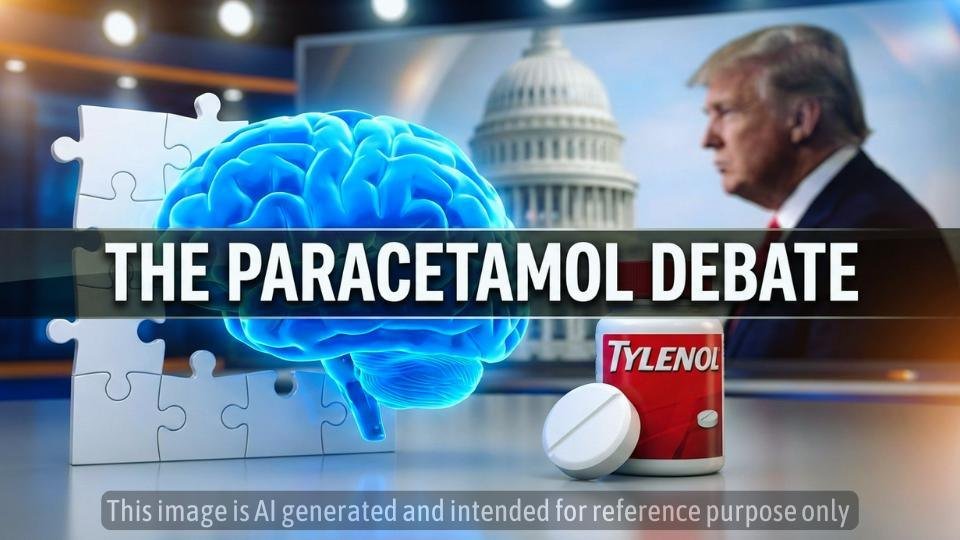
In a move that sent ripples across the globe, former U.S. President Donald Trump has made a startling claim, linking one of the world’s most common and trusted medicines, Paracetamol, to the rise in Autism cases among children. This assertion, made during a health-related announcement, has thrown the medical community, parents, and regulatory bodies into a whirlwind of debate, questioning the safety of a drug found in nearly every household’s medicine cabinet.
The Heart of the Claim: A Warning to Pregnant Women
The controversy began when Donald Trump, alongside Robert F. Kennedy Jr., a prominent anti-vaccine activist who has been designated as his health secretary, addressed the public. Trump claimed that Tylenol, the popular brand name for Paracetamol in the United States, could be responsible for the increasing prevalence of Autism.
The central point of their argument is that when pregnant women consume Paracetamol to manage fever or pain, it may affect the brain development of the unborn child, potentially leading to Autism Spectrum Disorder (ASD). Trump even declared that he would instruct doctors to stop prescribing the painkiller to pregnant women, a statement that has raised alarm among health professionals worldwide.
What is Autism? A Quick Primer
Before we dive deeper, it’s important to understand what Autism is. Autism, or Autism Spectrum Disorder (ASD), is not a disease. It is a complex neuro-developmental condition that affects how a person communicates, learns, behaves, and interacts with others. The “spectrum” means its symptoms and their severity vary widely from person to person. Some may have remarkable talents in specific areas, while others might face significant challenges in daily life. Its exact causes are not fully known, but scientists believe it stems from a combination of genetic and environmental factors.
The Medical World Reacts: Fact vs. Fiction
The response from the global medical community was swift and largely critical. Major health organizations, including the World Health Organization (WHO), have pushed back against the claim. Dr. Soumya Swaminathan, a former Chief Scientist at WHO, has publicly stated that Paracetamol is a “proven safe drug” when used as directed.
So, where is this claim coming from? Trump’s announcement seems to be based on some studies, including those from institutions like Johns Hopkins University, that have suggested a possible correlation—but not a proven causation—between Paracetamol use during pregnancy and a slightly increased risk of ASD or ADHD.
However, the vast majority of medical experts have described this data as “weak” and an “oversimplification.” They argue that a definitive causal link has never been established despite decades of research. Many other factors could be at play, such as the underlying reason for taking Paracetamol (like a severe fever or infection during pregnancy), which itself could be a risk factor, alongside genetic predispositions. In simple words, the connection is far from proven.
A Look at the Numbers
The concern is understandable. According to the CDC, around 1 in 36 children in the U.S. is diagnosed with Autism. Globally, the number is closer to 1 in 100. This rising trend is what has parents and researchers on high alert. However, experts also attribute this increase to better awareness and improved diagnostic methods, which means more cases are being identified today than in the past.
Our Final Word: A Message of Caution and Calm
This is not the first time a common medicine has been questioned, and it likely won’t be the last. While the debate rages on, the overwhelming medical consensus is that Paracetamol remains the safest and most recommended pain and fever reducer for pregnant women when taken for a short duration and at the correct dosage.
Social Message: In an age of information overload, it’s easy to be swayed by alarming headlines. This news serves as a powerful reminder to always rely on credible scientific evidence and consult with healthcare professionals. Health decisions, especially during a crucial time like pregnancy, should not be based on political statements or fear, but on sound medical advice. Trust your doctor, stay informed through reliable sources, and prioritize your well-being with calmness and clarity.








Leave a Reply