
कृपया इसे हिंदी में पढ़ने के लिए यहाँ क्लिक करें
A Deep Dive into the Heart of Hindu Worship
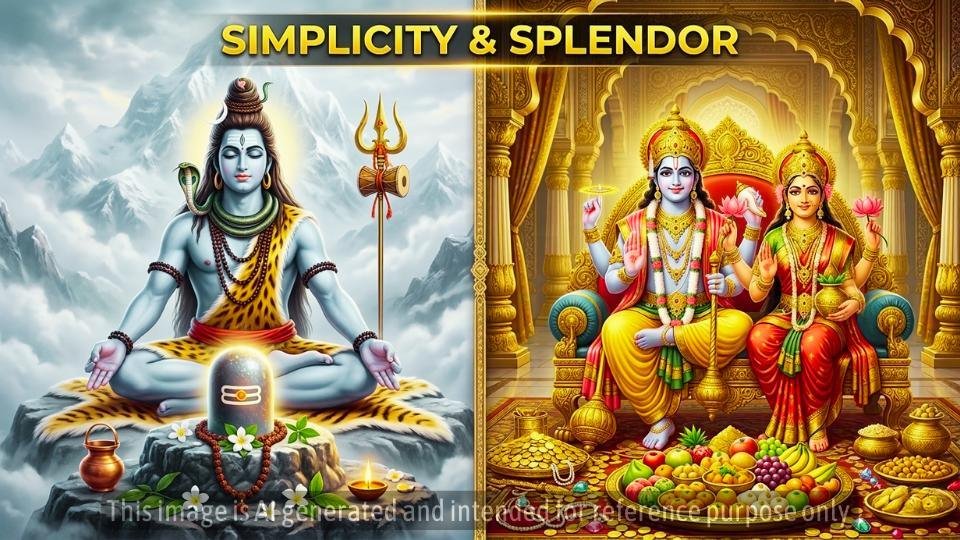
In the vibrant tapestry of Sanatana Dharma, every ritual, every offering, carries a universe of meaning. Today, we delve into a question that touches the very soul of our devotional practices: Why are the offerings to Lord Shiva so simple, often sourced directly from nature, while the worship of Sri Lakshmi Narayan is marked by grandeur and material abundance? Join us as we explore the profound philosophy behind these two distinct, yet interconnected, paths of devotion.
Lord Shiva: The Supreme Ascetic and the Power of Renunciation
When we approach Lord Shiva, the Mahadev, our offerings are humble and natural. We offer Dhatura, Bel leaves, and pour consecrated water or milk upon the Shivling. These are things that are readily available in nature, not products of human ambition or wealth.
The reason for this is deeply symbolic. Lord Shiva is the supreme ascetic, the master of detachment. He represents the power to rise above the material world and its entanglements. He provides the strength to transcend the worldly illusion, the sansarik prapanch. Therefore, worshippers approach him not with the fruits of the material world, but with elements that signify purity, renunciation, and a connection to nature. By offering simple, natural items, devotees express their desire to shed worldly attachments and seek spiritual liberation, the ultimate goal of human life.
Lakshmi Narayan: The Preservers of the Cosmos and the Embodiment of Prosperity
In stark contrast, when we worship Lord Vishnu (Narayan) and his consort, Goddess Lakshmi, our offerings are often elaborate and grand. We offer gold, silver, a rich variety of fruits, grains, and prepare sumptuous feasts. The magnificent “Chhappan Bhog” and the sacred “Charanamrit” are central to their worship.
Lord Vishnu is the preserver of the universe; he maintains the cosmic order and ensures that life flourishes. Goddess Lakshmi is the bestower of wealth, prosperity, and fortune, providing the resources necessary for a happy and fulfilling life. Together, they represent the maintenance of the material world.
When we offer them riches and a bounty of food, it is a gesture of gratitude for the abundance in our own lives. We are, in essence, offering back a small part of the material wealth they have bestowed upon us. This act acknowledges their role in our worldly success and seeks their continued blessings for prosperity. This is why we celebrate their worship with great expense and effort, preparing delicious foods like the “Chhappan Bhog,” a grand offering of 56 delectable dishes, and distributing “Charanamrit,” the blessed nectar from the deity’s feet.
A Tale of Two Paths: Spiritual Liberation and Worldly Duty
The difference in offerings boils down to the different energies these deities represent:
- Lord Shiva provides the power for detachment from the material world.
- Lakshmi Narayan provide the resources for living a happy and prosperous life within the material world.
Sanatana Dharma beautifully balances these two aspects of life. For householders (grihasthas), who have worldly duties to perform, the worship of Lakshmi Narayan is considered paramount for salvation. It teaches them to live a life of dharma, earn wealth righteously, and use it for the good of their families and society.
The Role of ‘Artha’ in Sanatana Dharma
Interestingly, Sanatana Dharma is one of the few spiritual paths that gives a significant place to the pursuit of wealth. Materialism is often viewed negatively in the world, but in our culture, money, or Artha, is one of the four essential goals of human life, known as the Purusharthas. These are Dharma (righteous duty), Artha (wealth), Kama (desire), and Moksha (liberation). Wealth is not seen as an evil, but as a necessary tool to fulfill one’s duties and lead a balanced life. Thus, the worship of wealth in the form of Goddess Lakshmi is not just about materialism; it is about honoring a divine energy that sustains life and allows for righteous living.
A Social Message: Balance is Key
The contrasting styles of worship of Lord Shiva and Lakshmi Narayan offer a profound social message: Life is about balance. While spiritual liberation and detachment are the ultimate goals, we must not neglect our worldly duties. A truly fulfilling life is one where we can be successful and prosperous in the world, while simultaneously cultivating a sense of inner detachment and spiritual awareness. We must learn to be in the world, but not of it.
By understanding the deep symbolism behind our rituals, we can move from blind faith to enlightened devotion.
Disclaimer: This article is intended for informational and educational purposes only. The views and interpretations expressed are based on generally available information from Hindu scriptures, traditions, and cultural practices. This content is not intended to be a substitute for professional religious or spiritual advice. Readers are encouraged to consult with qualified spiritual leaders or scholars for personal guidance. The publishers of this blog do not claim absolute authority on religious matters and present this information to foster understanding and respect for diverse spiritual traditions. The practices and beliefs described may vary among different sects and communities within Hinduism.






Leave a Reply