
कृपया इसे हिंदी में पढ़ने के लिए यहाँ क्लिक करें
Hello, readers, and welcome to the news desk where we unravel the truths of the world, one story at a time. Today, we’re diving into a sensation felt in kitchens and restaurants globally—the fiery kick of a chili pepper. Have you ever wondered why biting into a tiny pepper can make you feel like you’ve swallowed fire? What if I told you that the “heat” you feel is all a clever trick? That’s right, spiciness isn’t a taste at all. It’s an illusion, a fascinating story of brain chemistry, and a perfect example of pain turning into pleasure.
A Spicy Backstory: More Than Just a Flavor
Before we get into the science, let’s appreciate the star of our story: the chili pepper. Cultivated for thousands of years, chilies have been a cornerstone in cuisines across the globe, not just for their perceived heat, but for their ability to preserve food and their numerous health benefits. But the very thing that makes them special is a brilliant defense mechanism that they developed to keep animals from eating them. Humans, however, did something unexpected—we fell in love with the burn.
The Master Culprit: Meet Capsaicin
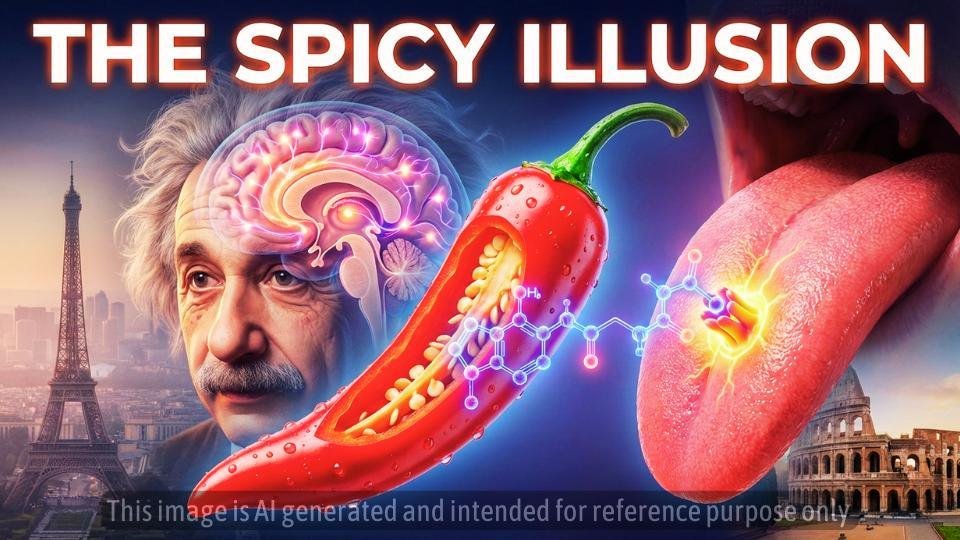
The entire sensation of spiciness comes down to one key chemical compound: Capsaicin. This is the active component in chili peppers. When you eat a chili, you’re not tasting “hot”; you’re coming into contact with this crafty molecule.
Here’s the breakdown of its grand illusion:
- The Brain Hack: Your tongue is covered in nerve receptors. One specific type, known as the TRPV1 receptor, is our body’s primary heat detector. Its job is to tell the brain when something is physically hot, like a hot cup of tea or a piece of pizza fresh out of the oven, typically activating at temperatures above 109°F (43°C).
- The Trick: Capsaicin has the unique ability to bind to these TRPV1 receptors and activate them. It essentially “tricks” them. The receptors can’t tell the difference between actual heat and capsaicin. They send an urgent panic signal to the brain that says: “EMERGENCY! The mouth is on fire!”
- The False Alarm: Your brain, believing it’s dealing with a real burn, goes into full defense mode. It immediately triggers all the body’s cooling systems:
- Sweating: Your brain tries to cool your body down.
- Tears and a Runny Nose: Your mucous membranes work overtime to flush out the fiery invader.
- Burning Sensation: The brain interprets the signal as pain and heat, creating the burning feeling we know as “spicy.”
So, to be clear: there is no real heat. A chili pepper doesn’t actually burn you or increase the temperature in your mouth. It just makes your brain think it does.
The Twist: Why Do We Enjoy This “Pain”?
This is where the story gets even more interesting. If spiciness is just a pain signal, why do billions of people not only tolerate it but actively seek it out? Why do we have hot sauce challenges and competitions to eat the world’s hottest peppers?
The answer is Endorphins.
When your brain receives the pain signal from the capsaicin, it wants to provide relief. To do this, it releases its own natural painkillers called endorphins. These chemicals block the pain signals and create a feeling of mild euphoria or happiness. This is often accompanied by a release of dopamine, the “feel-good” neurotransmitter associated with reward and pleasure.
This rush of endorphins and dopamine is what creates the “spicy high,” a feeling of exhilaration and well-being. It’s similar to a “runner’s high” experienced after intense exercise. We become addicted not to the pain of the chili itself, but to the pleasurable rush our own brain provides in response to it.
A Social Message: Embrace the Spice of Life
The story of the chili pepper is a beautiful metaphor for life itself. Sometimes, the most rewarding experiences come from facing a little bit of a challenge. It shows us how our bodies and minds are built to overcome discomfort and find pleasure in the process. We are designed to handle the “heat” and come out feeling stronger and happier. So, the next time you enjoy a spicy meal, remember the incredible dance happening between your tongue and your brain. You aren’t just eating; you are fooling your brain for fun, and that’s a truly remarkable thing.
Disclaimer: The information provided in this article is for general informational and educational purposes only. It is not intended as, and should not be considered a substitute for, professional medical advice, diagnosis, or treatment. The content is based on scientific research and publicly available information, but the field of science is constantly evolving. Therefore, we do not guarantee the accuracy, completeness, or timeliness of the information presented.
All individuals react differently to foods, including spicy foods. Some people may have allergies, sensitivities, or medical conditions (such as gastritis, IBS, or acid reflux) that can be aggravated by consuming capsaicin-containing products. If you have any underlying health concerns, please consult with a qualified healthcare professional before making significant changes to your diet. The authors, editors, and publishers of this blog are not responsible for any adverse effects or consequences resulting from the use of any of the information or suggestions contained herein. Reader discretion is advised.








Leave a Reply